


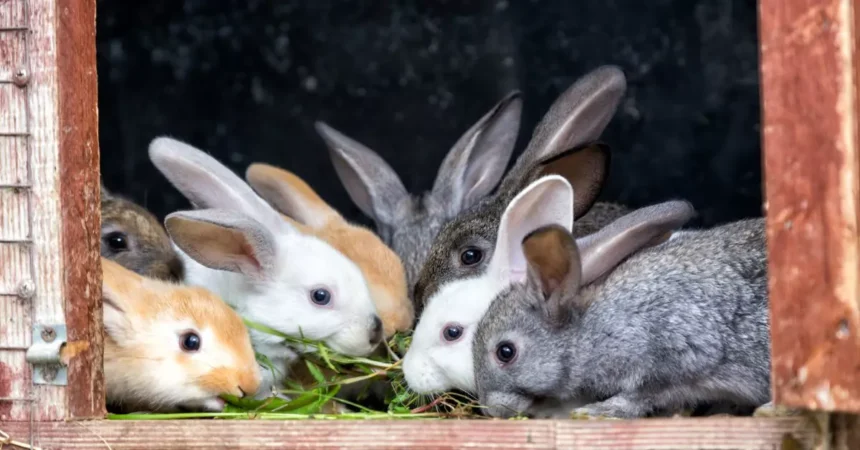
The homestead dream often includes livestock, and that dream seems unattainable for those on a small homestead. Fortunately, raising rabbits is open to everyone. Rabbits can be raised anywhere, including urban houses with tiny yards and apartment homesteads. Rabbits are an excellent idea for small-scale homesteaders. They do not require much space, they are quiet, they are prolific breeders, and they provide multiple income opportunities, as well as beneficial manure for the market garden. If you are raising rabbits on a small homestead, the small space you are working with will require extra attention to cleanliness. Cages will need to be cleaned daily and sanitized weekly. Apartment homesteaders will be limited to the space on their porch or balcony.
Animals contribute to the health and prosperity of small farms. But they don’t do it on their own. Animal husbandry at any level takes a good amount of work. You must be consistent with their handling, feeding, and general care. Anything less is inhumane. Even if you are raising animals destined to be slaughtered, they should be afforded a good life with a swift end. Consider your resources – time, money, land, and the amount of effort you are willing and able to expend before you purchase your first animal.
When deciding on the rabbit that will best serve your needs, spend a fair amount of time deciding which breed is best for you. You not only want to pick a breed that you like, but one that naturally does what you want it to do and one that is well-adapted to your climate. I advocate heritage breeds whenever feasible. They keep our food supply diverse and are generally healthier, hardier, and tastier than most commercial breeds. The Livestock Conservancy publishes a list of threatened breeds each year.
Including animals in your homestead business significantly increases the amount of money you can make. People are extremely interested in organic, humanely-raised meat, and they are willing to pay a premium price for it.
If you want to raise meat animals, you need to be sure you can harvest them when it is time. If you can’t, will you be able to let someone else do it for you? Be honest with yourself. If you can’t harvest an animal, it is not a meat animal. Animals do not have to be bred for the table. There are plenty of no-kill products that allow you to have farm animals, make a profit, and let them live out their natural lives.
Rabbits can be harvested as fryers at three months of age, weighing between 1 ½ and 3 ½ pounds. Roasters are older rabbits, harvested at 8 months of age. When harvesting rabbits for meat, keep the pelts as whole as possible. Tanning rabbit hides is a relatively simple process and can double the profit made from each rabbit.

The Best Meat Rabbit Breeds
If you are interested in raising meat rabbits, focus your attention on the following breeds.
New Zealand White: This breed is known for the quality of its meat and reaches an average market weight of 10 pounds.
Giant Chincillas: Giant Chincillas reach a market weight of 12 pounds and the meat is rated excellent. Chincillas are also prized for their pelts.
Californian: excellent meat breed.
Champagne D’Argent: Excellent meat and fur. These rabbits are born black and turn silver.
Of course, rabbits do not have to be raised for the table. Natural fibers are very popular and can make you a handsome profit without harming your rabbits. You can sell the wool as is, washed, carded, or spun. The more value you add to the fiber, the more profit you will see. If a no-kill rabbit farm is more your style, consider the following breeds known for their fiber.
The Best Rabbits for Fiber
Angora breeds have long been considered the best rabbits for fiber production. Angora wool is obtained by pulling the loose hair from the mature coat. It does not hurt the rabbit.
English Angora: This is a small breed, weighing between 5-7 ½ pounds. The wool is luxuriously soft and can be white or colored.
French Angora: These rabbits are slightly larger, weighing between 7-10 pounds. Their wool is coarser than the wool of the English Angora but still very desirable.
Giant Angora: White fiber on a 9-10 pound rabbit. Satin Angora: The fiber can be white or colored and has a beautiful sheen.

Rabbit Husbandry
Regardless of whether you are raising rabbits for meat or fiber, the husbandry remains the same. You will need to provide a hutch, feeders and waterers, nest boxes, commercial feed, and hay. If you have a yard, you may also want to provide a rabbit run so your rabbits can graze.
The rabbit hutch should be easy to clean, receive plenty of air flow and provide ¾ square foot per pound of rabbit (mature weight). Wire hutches with a pull-out tray make stacking and cleaning easier. Cages should be located in a shady area that receives plenty of air circulation.
Feed rabbits their portion of commercial feed in late afternoon or early evening. Rabbits can be pastured during the day as long as they are not in full sun. Make certain your rabbits have access to salt and fresh water.
We have all heard that rabbits are prolific breeders. This is a good thing, especially if you are raising meat rabbits. Medium and large breeds are ready to breed at 6 months of age. Giants are ready for breeding between 9-12 months of age. When your rabbits are ready to breed, take the doe to the buck’s cage. If mating doesn’t happen after 10 minutes, return the doe to her cage and try again the following day. After mating occurs, return her to her hutch. Fill out the hutch card, including when the doe should kindle. The gestation period is 28-35 days, usually occurring on day 31. You can breed the same doe every 90 days.
Seasonal Rabbit Chores
Just like larger homestead animals, rabbits need consistent care. There are daily chores and seasonal chores. Keeping up with daily maintenance makes rabbit farming more enjoyable and more profitable, and the seasonal chores not only help to keep your animals healthy and happy but also provide a structure to your rabbit venture.
Winter: If you are in an area that experiences freezes, stop breeding your rabbits. Provide a light source if you do not experience freezes and want to continue breeding. Add extra straw to bedding for warmth and provide extra calories. Do not allow water to freeze – rabbits will not eat if they do not have access to water.
Spring: Check and repair rabbit tractor/set up rabbit runs. Allow unlimited access to pasture for the remainder of the year.
Summer: Summer is the time to source the hay you will need during winter. Breed does for the final kindling of the year. Make certain your rabbits always have adequate shade. Provide ample fresh water.
Fall: Repair/replace any equipment before winter. Plant clover and perennial rye plots. Clover and rye can be planted in raised beds for those with small yards. Winterize rabbit housing. Make sure your records are up to date.
Income from Raising Rabbits
There are a variety of income sources you can investigate as a rabbit farmer. If you already run a CSA, allow customers to add rabbit meat to their packages for an increased price. You can also host on-farm sales. Processed meat isn’t usually allowed at farmers’ markets, but you can sell meat directly from your farm.
Pow-wows and Renaissance fairs are great places to sell your rabbit pelts.
You can also take advantage of the farm-to-fork craze. Let the local chefs know you have pastured rabbits available.
If you raise no-kill rabbits, sell the fiber to crafters. Wool is a high-priced commodity. You can sell the wool as is, processed into fiber batts, or as spun fiber.
Sell breeding trios. One buck and two does are enough to get someone in the breeding business.
Sell rabbit poo. Rabbit manure is a fertilizer that can be placed directly on the garden with no chance of burning the plants.
Sell bone meal to organic gardeners. After harvesting meat rabbits, wash the bones. Let dry and grind into a powder to add to gardens.

Do the Math
Dressed rabbits sell for $10-12. There are usually 6 rabbits born to a litter, and it takes 8 weeks for them to reach harvest size. Pelts, properly processed, also sell for $10. This doubles the profit on your meat rabbits.
Angora wool sells for up to $95.00 per pound.