


When people imagine their first year of homesteading, they tend to picture thriving gardens, overflowing pantries, and picturesque evenings spent watching the sunset over a property they can finally call their own.
Our first year looked a little different.
After nearly four years of planning, researching, dreaming, and saving, my husband Brian and I finally made the move to our remote Northern Ontario homestead in mid-April. The property had actually been ours for almost a year, but arriving as permanent residents for the first time felt like crossing a finish line.
As we got closer to the property, somewhere around fifty miles out, snowflakes started falling.
Brian looked over at me. I looked at him. Then we both burst out laughing.
“Welcome to Canada.”
It seemed like nature was determined to make a memorable first impression.
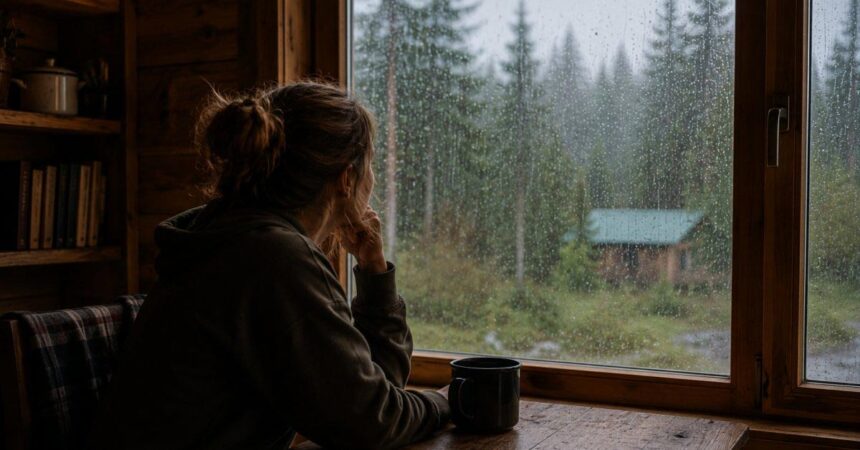
The early-spring flurries quickly turned into teeming rain that didn’t stop for nearly three weeks. Apart from a slightly damp mattress and a few soggy boxes, most of our things couldn’t be unpacked. We sat in our small cabin, waiting anxiously to start any of the hundreds of projects we had carefully planned.
At the time, our small cabin was only dried in. We had no solar electricity, no running water, no refrigerator, and very few comforts. We were living in a construction project while staring out the windows at a landscape that refused to cooperate.
It was a rough introduction to homesteading.
Looking back now, though, it was probably the perfect one.
The first lesson arrived before we had even planted a seed.
We learned quickly that nature doesn’t care about your timeline. No matter how carefully you plan, how many books you read, or how many spreadsheets you create, the weather gets the final vote.
The Frost That Took Everything
Like most new homesteaders, we started our first garden with equal parts enthusiasm and optimism.
We lovingly started seedlings indoors. Tomatoes, peppers, corn, spinach, onions, lettuce—more than one hundred little plants that represented months of anticipation.
By the time planting season arrived, we had finally built our first garden bed. The seedlings were thriving. The weather was warm. Things were finally starting to come together.
Then the frost came. The truly frustrating part wasn’t that we ignored a forecast or took a risk. There was no warning.
When we went to bed around midnight, it was nearly 60 degrees outside. No frost warnings. No indication that anything unusual was about to happen.
The next morning, I stepped outside and saw it immediately: Heavy frost. Everywhere.
I took off running toward the garden, slipping and sliding through the frosty grass. By the time I reached the beds, most of the plants were already wilted. Some had started turning black.
Every single plant was gone. Not damaged, not struggling, just gone.
My first reaction felt more like grief than disappointment.
Anyone who has spent weeks nurturing seedlings understands that odd attachment that grows. You watch them emerge. You protect them. You celebrate every new leaf.
Then the panic set in.
We were already dealing with a short growing season. Starting over wasn’t part of the plan. Then again, neither was frost in what should have been safe planting weather. That was the moment I learned one of the most important lessons of homesteading: Always have a backup plan.
Today, we start a second batch of seedlings, two to three weeks after the first. If disaster strikes, we’re covered. If everything survives, we sell the extras.
Experience may be a tough teacher, but it tends to be effective.
The Six Sad Jars
By late August, we had clawed our way back from the frost disaster. Our garden wasn’t exactly thriving, but it was surviving.
When berry season arrived, we gathered wild berries from along our road and proudly spent the afternoon preserving them.
We had visions of homemade breakfasts in the middle of winter. Fresh berries spooned over yogurt on cold February mornings. The kind of harvest every homesteader dreams about.
Then we finished canning.
Six jars.
That was it.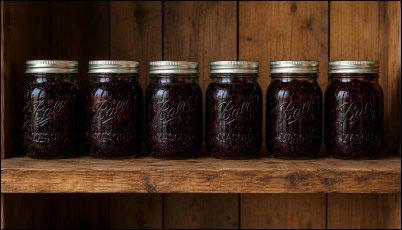
After months of work, planning, gardening, and dreaming, our entire preserving season amounted to six somewhat pathetic jars sitting on an otherwise empty shelf.
Brian and I stood there staring at them. There was a long silence. Finally, I looked at him and said something along the lines of, “Well, that should keep us for a while.”
We laughed because there wasn’t much else to do.
While that half dozen jars of preserves could have easily been seen as a failure, they certainly taught us something valuable — Success on a homestead isn’t always measured in volume. Sometimes it’s measured in persistence.
Those jars weren’t impressive. But they represented a season where we kept going despite setbacks, disappointment, and plenty of failure.
The Tornado
Just when we thought we’d had our share of surprises, nature had one more lesson prepared for us.
This one arrived with a panic-inducing tornado warning.
Brian was away for work when the alerts started appearing on my phone. Thunderstorms had been forecast, but tornadoes weren’t something I expected to deal with that day, or any other day.
I grabbed the dog and cat, threw them into the truck, and headed for our neighbor’s house about a kilometer away.
Unlike our cabin, they had a basement. Within minutes, we were in it.
The storm itself was violent and fast. Then it was over.
The moment the danger passed, we stepped outside and began assessing the damage.
The road leading back to our property was blocked. Then another blockage. And another.
By the time we reached our land, it took three of us with chainsaws several hours to clear enough fallen trees to get through with a vehicle.
Hundreds of trees had come down. Many were twisted together in massive tangled piles.
As I got closer to our cabin, my stomach sank.
Our home sits in a relatively small clearing surrounded by forest. Looking at the destruction around us, I was convinced something had been hit.
More than forty trees had fallen throughout the clearing. Some missed the cabin by mere centimeters. Others narrowly avoided the solar array, the woodshed, the trucks, the backhoe, and our new garden structure.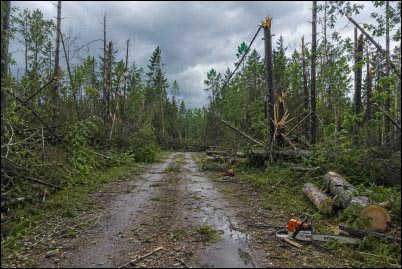
Miraculously, nothing was damaged.
Not the house. Not the equipment. Not even the materials for the addition, which we had spent two years preparing.
The relief was overwhelming, and so were the cleanup efforts.
The tornado forced us to abandon plans for the residential addition we had intended to build that season. Lumber had been milled. Foundations had been started. The timeline was gone.
For a while, that felt like failure, but now we see it differently.
Sometimes success is surviving the storm and adapting to what comes next.
The Bear-Proof Fortress
No rookie-homesteading-season would be complete without a healthy dose of humility. Ours arrived in the form of a black bear.
Determined to protect our garbage, I spent two days building what I believed was a bear-proof garbage enclosure.
Using scrap limbs from trees we had cleared, I constructed a sturdy container around the garbage cans.
It looked fantastic, and I was shamelessly proud of it. At one point, I even climbed on top and jumped up and down to demonstrate its strength. There may have been some bragging.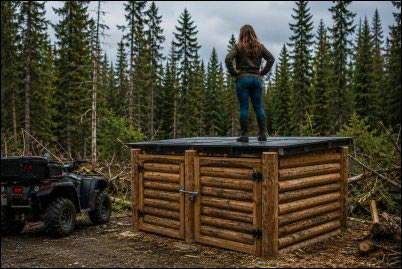
Less than twelve hours later, the enclosure was shredded. Garbage was scattered throughout the clearing. The bear had essentially treated my masterpiece as if it were made of popsicle sticks.
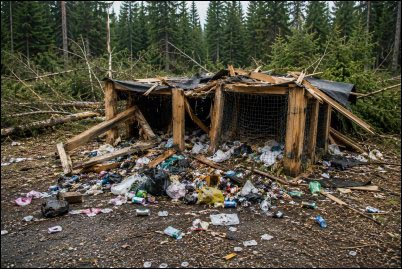
It was one of those classic moments where you realize nature has been playing this game much longer than you have.
We were going to need a “bigger boat”. Or at least a stronger garbage container.
What We Learned
The strangest thing about our first year on the homestead was that nearly none of our plans worked out as we imagined, and yet we had the best time. Our garden failed, our construction plans had to be put off for another year, the weather ignored our expectations, and the local wildlife mocked my engineering skills — and yet, somehow, we survived. We just adjusted our plan and tried to go forward with enthusiasm and a good sense of humor.
Going forward, we adjusted our planting schedule by using backup seedlings and stopped planting anything permanently until after June 1st. We began covering vulnerable plants when temperatures looked even remotely questionable. And, most importantly, we learned to pivot quickly, accepting that certain things are beyond our control.
The Real Point of Homesteading
If I could go back and talk to the version of myself sitting inside that unfinished cabin during those first three weeks of rain, I’d tell her to relax.
The dream isn’t falling apart. It’s just beginning.
Many people imagine homesteading as a destination. They picture the finished house, the productive gardens, the stocked pantry, and the perfect social media photographs.
While those moments exist, they aren’t the lifestyle. They’re only small snapshots, and everything else that builds your homestead is found in between those moments. It could be the frost that kills your first garden, a tornado that changes your long-term plans, or a fat and sassy Black bear that humbles your confidence.
If there is one thing our Rookie year taught us, it’s this: The goal isn’t to create a perfect homestead — it’s to learn how to build a life that can weather imperfect days. And trust me, there will be plenty of those.
So, to every new homesteader standing on the edge of this adventure, my advice is simple: Buckle up. Something will go wrong.
But if you can learn to adapt, laugh, and keep going, you’ll discover that the journey itself is the best part of the whole experience.
Author Bio: Aly Nickling Riddle is a freelance writer, speaker, and full-time homesteader living on a 40-acre property in Northeastern Ontario. After spending years researching the move to a self-sufficient lifestyle, Aly and her husband traded convenience for adventure and now share honest, practical insights about the realities of homesteading. She is the author of Homesteading: Is It the Lifestyle for You?, a guide designed to help aspiring homesteaders evaluate whether the lifestyle is the right fit before making the leap.