


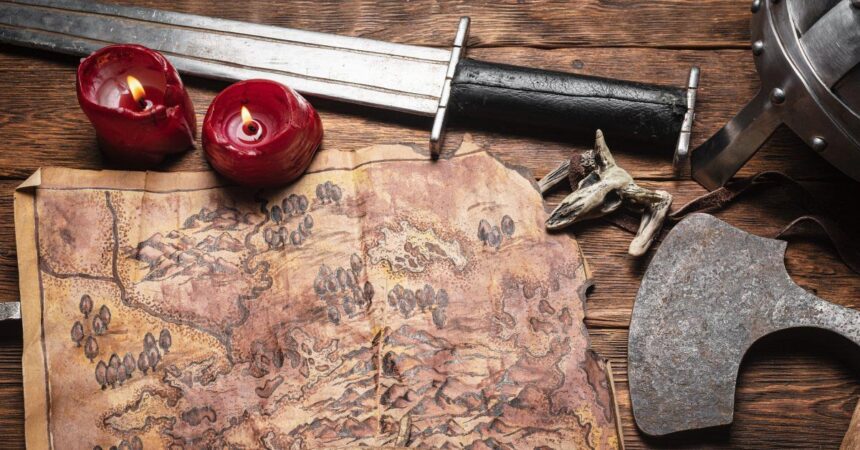
They came from the land of ice and snow. They raided, they traded, they explored. They hailed from the Scandinavian region of Northern Europe, which included Norway, Sweden, and Denmark, and sometimes Iceland and Finland. They were ferocious pillagers and looters, known far and wide for their pillaging prowess. They could also farm and hunt, but most of all, they excelled at war.
Scandinavian Seafaring Warriors
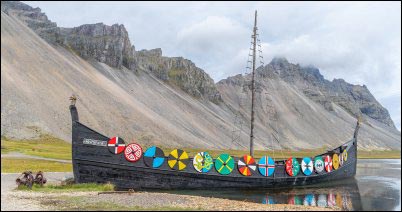
I was enthralled when I saw an example of a Viking longship. They were works of art. They were built for speed and allowed the Vikings to get to many of their destinations, thus conquering far distant regions and peoples. They sailed much of the North Atlantic, traveling as far North as Africa and as far East as Russia. That’s a lot of the world to cover, but the Vikings were not intimidated.
“Odin gave his eye to acquire knowledge. But I would give far more.” It is not known who said this, but it shows their quest for knowledge and their ambition.
The Viking Sunstone
Among their numerous seafaring skills, they used spar, which is a type of calcite, also known as Viking sunstone. It was their secret navigational weapon. Calcite, being a crystal, could polarize light. When held up to the sky, light was refracted through the sunstone. This let them determine the direction of the sun on cloudy days and even when the sun was below the horizon.
Sheild Maidens
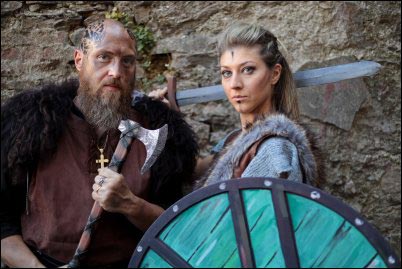
I never thought of Viking women taking to the battlefield and fighting beside their men. But some did, and they held their own on the battlefield.
These Viking women were known as “shield maidens.” They wielded weapons and wore armor. They reached the pinnacle of success when they were written into Viking poems and songs.
Lagertha was a famous shield maiden of the Viking era. Legends written about her tell us that she was a Danish noblewoman. Lagertha went into battle with her husband and fought against the Swedes.
Her husband was killed in the battle, but she carried on, leading her troops to victory. She was a legendary warrior of her time and later became Queen of Denmark.
Freydis Eiriksdottir. She sailed with her brothers to Vinland in the 11th Century, the cape of Newfoundland, Canada, also known as L’Anse aux Meadows. Her brothers were killed in battle, but she fought on. When it was over, she had earned the respect of the locals.
They Were Raiders
As prolific seafarers and raiders, people of the North Atlantic regions never knew where the Vikings would turn up. But they soon learned to keep a sharp eye out for them. The Vikings were not to be taken for granted; their attacks were legendary. And the longships made it much easier to pull off their raids. These boats were brilliantly crafted for speed.
Viking Proverb “Sa’ vinnur sit ma’l, sem praaastur er.” Translation: “He who is most stubborn will win.”
Could this be the modern equivalent of, “He who dies with the most toys wins?”
A favorite target of the Vikings was the monasteries of England, Scotland, and Wales. Monasteries weren’t well fortified in those days, and they held many gold and silver treasures that parishioners had gifted to them.
Monasteries were soft targets since they were far away from the bigger towns, and it could also be that, besides the priceless loot available, they were seeking revenge against the invasion of Christianity that was spreading in Scandinavia.
The Beginning of the Viking Age
The raid at the monastery on Lindisfarne in 793 AD marked the beginning of the Viking Age. The Vikings continued their raids along the rivers of France, Eastern Europe, and Byzantium, an ancient Greek city.
They raided and plundered all through Spain, the Mediterranean, the North Atlantic, and North America. It seems there wasn’t any region that didn’t know the wrath of the Vikings.
Dane Law
After the Vikings invaded and conquered parts of England, they subjugated the people there to their laws. They laid down the law, and the people followed. This was the “Danelaw,” and it referred to the parts of England the Vikings controlled.
To be Viking was to be Pagan
Religion was a big part of Viking life. They practiced Norse Paganism; their main gods were Odin and Thor. They worshipped goddesses, too; they influenced very specialized areas.
Frigg: Wife of Odin and goddess of marriage and motherhood. It was believed she would intervene in all matters concerning children. She may have been a bit psychic, and it was thought she could see the past and the future. She was humble about her talents, which I’m sure was part of her charm. Frigg didn’t often reveal what she knew.
Frigg was a true earth mother, and, in many ways, she held the Norse clans together with her all-knowing and selfless ways. Our English word Friday is derived from her name, securing her place in cultural influence for all time.
Odin: Known as the All-Father, he was associated with war, wisdom, death, poetry, and magic. That’s a lot of areas to cover and be responsible for. Odin had one eye and a long beard and rode an eight-legged horse. He lost his eye by sacrificing it in exchange for matchless wisdom. Odin also had two ravens that flew across the world gathering information to bring to him. It was like having his own mobile hotspot wherever he went. That must have been nice.
Thor: God of thunder and lightning, he is an iconic figure in Norse mythology. He was the son of Odin and was thought to be the protector of Midgard, the realm of humans. He summoned lightning by wielding a huge hammer, and he rode through the sky on a chariot pulled by goats, wearing a magical belt that increased his strength. Marvel’s creation of Thor wasn’t far from the real guy.
Skadi: Goddess of winter, mountains, and hunting, she was responsible for bringing winter each year. Her beauty tempered her vengeance; she could charm and even kill other gods. She even rid the Vikings of Loki, the shapeshifter and trickster.
Valhalla: Also known as “Hall of the Slain.” It’s the afterlife for warriors who died bravely in battle. The Valkyries, the warrior maidens, had the duty of bringing the slain warriors to Valhalla. Odin presided over Valhalla. It had five possible realms the soul could travel to after death.
Slain warriors looked forward to going there after death, believing there was nothing more glorious than death in battle.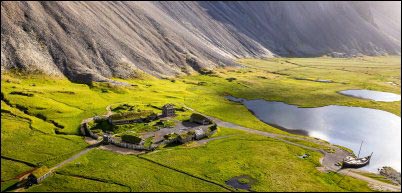
Viking Sagas
Viking sagas were stories told and passed down orally. They originated in medieval Iceland around the 12th to 15th Centuries, and the 13th Century is thought to be the golden age of sagas. They started orally but were eventually written down. These stories blended fact and fiction and were told about heroes, mythical creatures, and major events in Viking culture. The Vikings loved to sit around the fire at night and share their stories.
Two Kinds of Viking Poetry
Poetry was of the utmost importance to the Vikings. Spoken by Vikings known as skalds, their poetry was considered a gift from Odin. Two types of poetry existed in the world of the Vikings. It was a revered art offering wisdom and insights into life. The poetry was passed down orally through generations. There were two kinds of poetry in Viking culture. Viking poetry preserved their history and passed along their values. Bold yet poetic, civilized yet feared— this describes this part of Viking life.
Eddic poetry was mythological and heroic and was written about gods, heroes, and cosmic events. Their authorship is unknown, and they were in the period of AD 800-1100. Norway claims to be the birthplace of Eddic poetry, and that makes sense because many Vikings hail from Norway as well.
Skaldic poetry is more complex than Eddic poetry. It makes use of alliteration, which is simply the use of the same sound at the beginning of words in a line or verse. An example of alliteration is “baa, baa black sheep.” Skaldic poetry was spoken by well-known poets to praise kings and nobles of the day.
“Odin watches, wisdom’s keen eye, upon Sleipnir, he ventures high. With Huginn and Muninn, ravens bold, He seeks the truths the runes unfold.” —Viking poem
The Importance of Beards in Viking Culture
I have never seen a picture of a beardless Viking. A Viking without a beard was a Viking who could suffer being mocked by his fellows. These mockings were even written into their sagas. Vikings wore their beards proudly as a symbol of their manhood and their warrior status. Would you believe that insulting a fellow Vikings’ beard could have a deadly outcome and even cause a feud between families?
According to the Journal of Physical Anthropology, Scandinavians today tend to have heavier beard growth due to their genetic link to the Vikings.
Some Vikings were keen on dying their locks blonde. They used a strong lye soap to bleach their hair. Why? It wasn’t because they wanted to have more fun; it had a much more practical reason. It was to make the lice in their hair easier to see and pick off. That’s a pretty clever solution to an age-old problem.
They were cleaner and more steadfast about their appearance than many people of the time. It is not known why they found cleanliness so important, but it shows wisdom and pride on their part.
Vikings Valued Hygiene
Vikings were not dirty people as some stereotypes of them suggest. They were steadfastly clean and hygienic, despite having to battle lice in their hair. They bathed in nearby rivers at least once a week, whether they needed it or not. Combs, razors, and other implements of cleaning and grooming have been found in Viking graves by archaeologists. Vikings crafted animal bones into tools they used to groom their hair and beards, and to clean their teeth.
Board Games
Vikings played board games. The games sharpened their thinking, making them better seafarers and warriors. It also gave them something to do when there was nothing to pillage or plunder.
Hnefatafl was a game of wits, also known as “The King’s Table”, and was played on a board with 11×11 squares. Players had to get their king piece to a corner of the board before their opponent could capture it by surrounding it on all four sides. Could the video games of today be inspired by Viking board games? Viking children played wrestling games to help develop their agility. They also carved boats and dolls out of wood.
Magical Mead
The Viking drink of choice was Mead. Known as “honey wine,” mead is an ancient alcoholic drink. Not just fermented honey with added water, fruits, veggies, and herbs could be added to enhance the flavor of mead. Drink it and become wise, the Vikings believed. Mead was thought to have magical powers and endowed poets with their glib tongues.
They Ate to Win
A Viking diet was a varied diet. Again, we see the Viking wisdom and practicality. After all, they could not go into battle having indulged in an inadequate diet. They ate to win.
Of course, they loved meat, usually boar, but they included veggies, fruits, and dairy products in their diet as well. Cows were kept for dairy, and farming provided fruits and vegetables. And hunting provided the boar meat they loved. The Vikings have an illustrious history; the way they lived their lives still holds fascination for us today. To a Viking warrior, bravery and honor in battle were of the highest priority. They will be remembered for their raiding and plundering, and sadly not as much for their artistry and spirituality.
Their prowess in battle and in life is what attracts and fascinates most of us, but when we look closer, we see their softer side. They wrote poetry, and they believed in family, loyalty, and honor. They were more than warriors; they were also creators and craftsmen and family men. They have left us a legacy that is still with us today.