


There’s a new breed of pioneers on the horizon today. You’ll find them following the sound of their own drum, playing their own kind of music, singing their own kind of song. Many don’t embrace this trend, but some are embracing their individuality and leading the way in this new age of alternative home building.
Home is a State of Mind
Your home is where your story begins. Do you want to let someone else write that story for you? Builders of non-traditional homes are determined to write their own story. They walk fearlessly down the less-traveled road, believing that every step leads them to a higher calling.
The alternative housing movement is about sustainability, reducing our carbon footprint, and making use of products that others consider less worthy. The alternative housing movement has elevated lesser-known, unique materials and places in wonderful ways. The results include some incredible, and almost otherworldly homes.
A Treehouse Home: Be It Ever So Humble
Of all the alternative housing options out there, I find treehouses one of the most fascinating. Yet people live in them and have managed to carve out very successful lives despite what most of us might think would be an impossible place in which to dwell.
I’ve always been a lover of trees. I spent considerable time in my treehouse as a kid, and I would have lived there had I been allowed. It was awesome being high above the ground, completely immersed in nature, while my tree home gently swayed in the breeze. The sunshine came through the leaves and warmed my temporary home that I shared with the birds, the bees, and various other critters. I was no Julia Butterfly Hill; I eventually climbed down from my tree home when I knew lunch was about to be served.

Do you think you could adjust to life in a tree? You wouldn’t have to worry about neighbors or the noises of the city. Your visitors would be birds of all kinds, spiders, and maybe even a snake or two. Up among the branches, you’re completely immersed in nature.
The kind of people who can savor the uniqueness of a treehouse life are few and far between. But if you can live such a cloistered life, and you decide to take it upon yourself to build your dream home among the branches of a majestic oak, I hope you do your homework.
First of all, get to know the tree that will be your home. Is it structurally sound? How can you be sure of this? Consult an arborist. An arborist will check for:
Root System: The roots of a tree help hold it up, they are the legs of the tree.
Trunk condition: It needs to be strong and healthy.
Branch Stability: You’ll need strong and well-connected branches to support your home.
Each of these will ensure that your treehouse dream home won’t topple and leave you on the ground looking up.
Berm Homes for Sustainable, Net-zero Living
These alternative homes are built into the earth, often into a hillside, also known as a berm. These homes are built into a hillside with earth covering three sides of the home and the front left open so that natural light can pour in. A berm home could be just the ticket if you’re looking for excellent insulation and energy efficiency. Their earth-sheltered design gives homeowners natural insulation provided by Mother Nature. What’s really cool about these homes is how they blend with the surrounding landscape.
I know what you’re thinking: “mole hole.”
But just because you build it into the earth, don’t think a berm home can lack innovative design and exciting possibilities. You can let your imagination run wild when constructing these homes. And the advantages are as numerous as the stars in the sky, (which you’ll be able to see if you install a skylight in your berm home):
- Less maintenance
- Lower home insurance
- Consistent indoor temperature, thus less energy consumption
Soundproofing is also provided by Mother Nature. Made with mostly recycled materials, off-grid homes can sometimes use glass and plastic bottles as well as old tires in their home builds. And of course, solar panels will provide electricity.
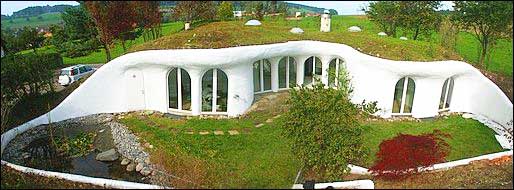
The earth surrounding the home holds heat and cold well. These homes can be built into an existing hillside, or a few tons of compacted earth can be used to construct their walls. The inside of the walls is covered with adobe (a mixture of clay, water, and straw).
Cooling tubes are used to cool the air in the house. The tubes run through the surrounding earth and into the home, making use of the cooler temperatures inside the earth. The temperature in one of these homes is close to that of a cave.
To collect water, some off–grid homes have panels on the roof or use a roof drip diverter. This is a vinyl-coated fabric that collects snow and rainwater and funnels it through a drainage hose into the home.
If you’re considering an earth home, you’ll reap the benefits of lower energy costs, more protection from natural disasters, and the knowledge that you are doing your part to help protect the natural world from damage and destruction.
Living Big in a Tiny Home
The tiny home trend is booming, and it just makes sense. People are finding out that there’s good living to be had in a tiny home.
Oftentimes, size does indeed matter, but when it comes to tiny homes, bigger has lost some of its shine. Folks these days are looking for sustainability and a reduced carbon footprint, so they downsize their living space. They’re finding out that decluttering and maximizing space bring the kind of peace that they were longing for.
It’s quality over quantity in the world of tiny home living. The average size of a tiny home is somewhere around 100-400 feet, and ways to maximize these spaces will amaze you.

A tiny home will definitely cut your cost of living since you’ll need less power to heat and cool your space. These homes can be customized to your liking by using multifunctional furniture and unique storage solutions.
Many tiny homeowners opt for a tiny home with wheels. That way, they have the ultimate mobility and can travel in style while still maintaining their individuality. If you don’t like where you’re living, just hit the road in your tiny home and don’t look back.
Shipping Container Homes
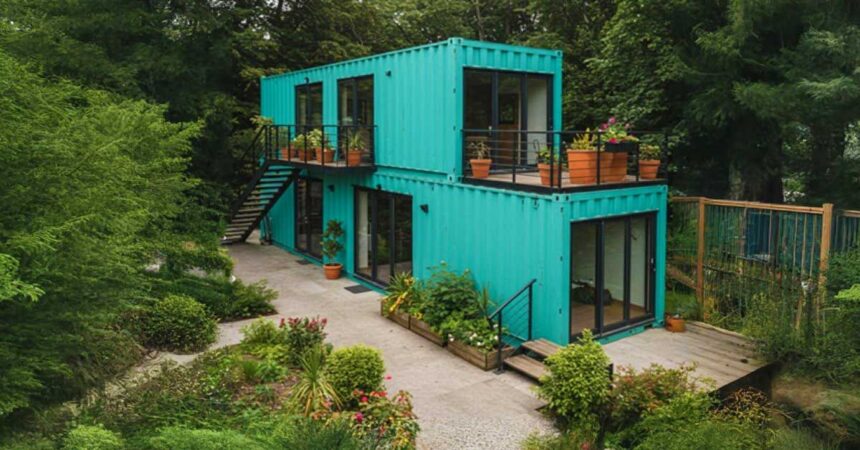
Every home is a container of sorts, but the container homes of today will leave you in awe when you see how creative some of these alternative home designs are. They may start out as a large rectangle, but they rarely stay that way.
A shipping container home can be as modern and comfortable as you want to make it. Maybe you don’t fancy living in a 40-foot rectangle, don’t worry, that’s not how it works. Shipping container homes are built to suit you.
Insulation is a must in one of these homes. They can get very cold and very hot. Either end of this spectrum can be uncomfortable and even deadly. You’ll need the kind of insulation that blocks radiant heat in the summer and keeps the cold out in the winter. This kind of insulation is provided in the container homes of today.
You can customize these homes almost any way you want. All the conveniences of home can be added as well. Bedrooms, bathrooms, living spaces, it’s all there in modern container homes for a great price.
Living Skoolie
If you want to find inspiration, meaning, and a sense of purpose, the skoolie bus life could be for you. If you want to think outside the box, live by your wits, embrace authenticity, think skoolie bus life. If you want to dance to your own kind of music, live like you’re dying, find peace within your soul, the skoolie bus life is for you. Those who live it take their freedom seriously. They embrace life’s uniqueness, authenticity, and creativity.
But first things first. Check out your bus for roadworthiness. The engine and body of the bus need to be in good shape. Ditto for the tires. Since you’re dealing with an older bus, make sure you give it a thorough once-over; I’m talking the whole enchilada.
You Won’t Be Poppin’ Wheelies
Which kind of bus would you choose? School buses have always been popular because of their durability; any vehicle that transports hundreds of rowdy kids every day has my vote.
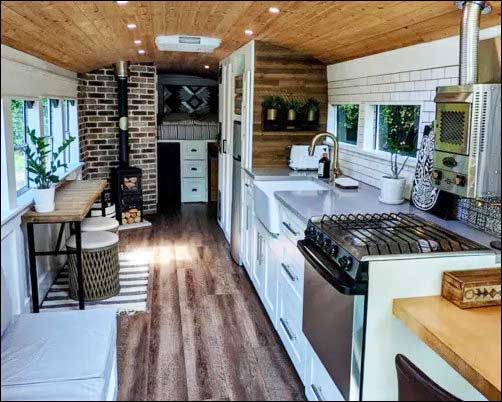
Once you choose a bus you want to convert, you’ve got to strip that bus down to its birthday suit. Gone will be the seats that held all those energetic kids for all those years. What’s left is one of the sturdiest frameworks the world has ever known. But still, you won’t be poppin’ any wheelies in it.
Truckin’
Bus life is a nomadic life, and that’s a huge part of its allure. Skoolie folks are not stuck in any one place; the world is their oyster. Imagine being able to crank up your school bus and hit the road. It’s the feeling of freedom that makes the skoolie life worth living. Because school buses are built to last, you’ll have plenty of time to live out the skoolie life of your dreams and have fun doing it.
There Will Be Challenges
Some obvious downsides of the skoolie life are limited space, less privacy, and sometimes the difficulty of finding a place to park your bus due to legal and zoning issues.
You’ll also need to consider water and waste management. Educate yourself on this, as it requires planning and regular upkeep. You’re likely dealing with an older bus, so maintenance can be expensive. Have some money saved for this purpose.
Clutter Vs. Clarity
Those who live in alternative homes love the lifestyle. They live a minimalist life close to nature and they have their freedom to change neighborhoods whenever they feel the itch. Life in a smaller home is customizable and cost-effective.
But living in a small space means you will have to come to terms with your possessions. It means chucking some junk out of your life. If you don’t do this, living in a school bus or tiny home will be much more difficult.
Clutter is the enemy of clarity. Think about the things you use most often and where they’ll be most accessible to you. Then, concentrate on some creative storage solutions.
Storage under beds and couches is an option to create more living space. If your under-furniture storage has wheels, so much the better. Under the floor storage can also be an option. Extra shelving in closets and over-the-door organizers will also go a long way in keeping your space free of clutter.
I applaud those who dare to live beyond the sidewalks and take on the task of building an alternative home. I hope their journey is an enjoyable and productive one. After all, home is a state of mind.