


Wild turkeys are fickle things.
The Texas Parks and Wildlife biologist who was going to do our land assessment had to reschedule our rescheduled (due to inclement weather) appointment because the turkeys that were going to be transplanted arrived early, causing all the TPW biologists to flock to West Texas for the event. (Apparently this is done in the winter, so the turkeys are dormant and can’t peck you while you stuff them into the ground).
We finally got to meet Heidi on a sunshiny afternoon, and while Julie had been looking at our place through Agricultural Traditional Farming eyes (and there’s nothing wrong with that), Heidi was seeing it as Wildlife Habitat that would also support a small family farm. I found Heidi by doing an Internet search on establishing native pasture, which steered me to the Texas Upland Game bird Restoration Program. My completely uneducated guess is that every state has Parks and Wildlife biologists who will be eager to talk to you regarding making your homestead a friendly place for wild things to call home.
Starting from the lowest point on our land, we hopped from marsh mound to marsh mound as she pointed out different types of ferns and water plants. Heidi explained that as odd as it sounded, the parks department recommended doing controlled burns on wetlands (?) because all the mounds that made for such convenient hopping were actually too old to be very appealing as food for ducks and geese, and that burning would encourage new growth and bring in the waterfowl.
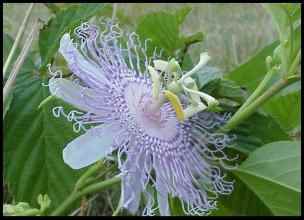
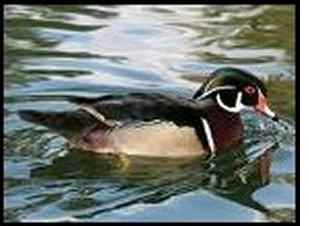
Surveying the eroding banks of our creek beds, she made notations of plants that would work well holding that precious soil in place – most notably viney things that set down roots every few feet like trumpet vines and passionflowers. Wow. How pretty would THAT be? Peering up at the tall trees lining the creek and spring branch, she said that there were several prime spots for Wood Duck nest boxes and asked if I’d be interested in having her send us a few. WOULD I? WOOD I? You betcha, boy howdy! I’ve only caught brief glimpses of these most beautiful of ducks in the wild, plus the nature documentary showing baby ducks leaping from their nest dozens of feet above the ground (and in almost agonizing slow motion), having the time and air space to execute several acrobatic feats and then land on the leaves and moss once, twice, sometimes bouncing three times before their little webbed tootsies stay in contact with the earth for good and they march with serious intent to the water.
In our future orchard and pond area, Heidi picked up one of the spikey balls that do an excellent job of protecting the ground from bare feet (along with the grass stickers) and asked Alec if he knew what it was. Now, Alec’s mother has TOLD him what those are. However, there is a vast, enormous, totally un-spannable difference between your MOM telling you something, and Heidi the uniformed, blond biologist, who drives the new pickup with the seal of Texas on it, telling you something. Alec can now tell you that the spikey ball is the seed of a Sweet Gum tree, can point out a Sweet Gum seedling, and show you the adult parent Sweet Gum tree.
Whatever.
Moving on to our teensy beginning of a vegetable garden, she noted that the deer have already discovered our two berry bushes (ok, berry twigs) and recommended fencing the garden ASAP. At this point we hadn’t even crossed over the creek to the hay meadow and she asked, “Are you SURE this is only 12 acres?” I assured her that according to the spanking new survey, it IS 12.02 acres. In fact since one of those 12.02 acres includes the county road, two wooden bridges and between two and four feet on the other side of the road, as well as at least another acre encompassing the creek, spring branch and accompanying meandering wooded banks, it’s more like 10 acres, and two of THOSE acres are wetland (or as we refer to it here in East Texas, “bottoms”).
Hiking to the top of the hill, Heidi pointed out a stand of brambles and wild blackberries, milkweed (showing Alec the silky seeds in the pods and explaining that milkweed is the only food eaten by Monarch butterfly caterpillars), and happily amazed that there was no introduced Bermuda grass. If there had been, the parks department has a program that will give landowners, for free, the secret powerful poison to kill the highly invasive Bermuda grass in readiness to re-establish the natives. I told Heidi that we are only the third recorded owners of this place and that no one has ever lived on it, ever.
We stopped to catch our breath under a giant Sweet Gum tree at the top of the hill (home of Alec’s future tree house), our neighbors’ 25-acre woods stood behind us, across the tiny county road lay over 400 acres of wild bottoms held by out-of-state owners and a family trust.
Despite being only three miles away from town and the four-lane highway that runs through it, we heard nothing but the wind and the birds.
“I go out on a lot of these assessments”, Heidi said, looking at me, “and I can tell you this is by far the nicest small acreage I’ve been on in this area.
Little did she realize how dangerously close she was to being hugged by an old hippie chick at that moment.
The recommendation for the hay meadow was to do a controlled burn (again with the burning…) and then sow it with native grasses and wildflowers.
I was promised a report in the mail, suitable for submission directly to the county appraisal district, to apply for our ‘Wildlife Habitat Management’ tax credit.
To keep this in effect, we need to actively fulfill three of TPW’s list of recommendations per year and submit them with photos and receipts (if applicable) to the appraisal district.
So this year if we put up the wood duck nest boxes, do the burn/native grass planting in the hay meadow, and use Ward’s night scope that he got for Christmas to do a wildlife census, that’s our three. If we do the wetland burn, establish native flowers to attract butterflies along the roadsides and start planting viney things on the creek banks next year, that’s another three. Adding onto or doing something to maintain or improve things we’ve already done count as well. So (since we have such a long stretch of creek banks) we’ll specify where, what, and how much is planted each year.
The official report that Heidi sent me states our Objective as, “to improve and enhance the habitat for white-tailed deer, songbirds, waterfowl and other game and non-game wildlife for conservation and recreation purposes in conjunction with running a small family farm. Likewise, managing and maintaining healthy, diverse, and sustaining populations of wildlife will create personal satisfaction in providing quality stewardship of the property.”
I like it.
Of course a big part of the “small family farm” equation means providing our livestock with food as close to year-round as we can. My feeling was, that since goats are not really grazers, but browsers, instituting rotational grazing of a meadow of mixed grasses, forbs and legumes would actually be better for them than a diet of straight fertilized Bermuda, but I wanted to be sure, and also be comfortable tossing my little Arabian mare into that mix. I called my goat-vet, who’s known me for over a dozen years and likes me anyway.
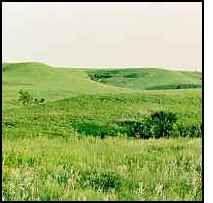
Acreage already planted with the Prairie Starter Mix in the Texas Hill Country
Dr. Wilson was emphatic both in his assurance that my stock would not only do fine, but thrive on that type of management, and that considering the relatively small acreage involved and the fact that it is on a hill, it may be difficult to interest anyone to come cut and bale Bermuda grass for us.
That’s not to mention the necessity of fertilizing the darn stuff every year.
Native is the way to go. He was also quick to point out that the whole wildlife habitat restoration/non-chemical natural organic pasturing concept is just more “me” in every way. I think he meant that in a good way, but sometimes it’s best not to demand too much elaboration.
Heidi had given me names of several professional firebugs who do controlled burns for a living. She recommended calling the fire dept. and having them on hand ‘just in case’. I decided to see if I could do away with the middleman and called our volunteer fire dept and asked if they would be interested in burning off the meadow as a training exercise. The excitement at the prospect was evident over the phone line.
They will be HAPPY to come set our field ablaze, and only ask a donation in return. As soon as we get the correct timing and combination of rain followed by fair and calm weather, we’ll be witnessing (and Alec will be cheering) the conflagration of sticker burs, stinging nettles and goatweed (which I’ve learned is actually one of the only things that goats WON’T eat).
Once the ground cools off we’ll be ready for planting.
Native American Seed Co. (http://www.seedsource.com/catalog/index.asp) was a seed source highly recommended by Heidi. Jayson, my new friend at Native American Seed Co., spent a goodly amount of time counseling me on the phone.
Although his company has several lovely mixes of native grasses and wildflowers, when I told him the acreage we were working with and what we wanted to accomplish with it, he figured up a custom mix that would be both nutritious and successional just about year round.

Date: March 1, 2007
Custom Seed Mix for 4 Acres
ITEM #
Grasses
% by wt
2014
Prairie Wildrye
22.83%
2011
Eastern Gama
13.65%
2002
Big Bluestem
9.18%
2003
Little Bluestem
9.18%
2004
Sideoats Grama
7.94%
2006
Indiangrass
6.95%
2034
Switchgrass, Upland
6.95%
2010
Green Sprangletop
3.47%
80.15%
Wildflowers
% by wt
1014
Cutleaf Daisy
7.20%
3075
Illinois Bundleflower
4.47%
1016
Partridge Pea
3.97%
1021
Purple Prairie Clover
1.49%
1024
White Prairie Clover
1.24%
3143
Bush Sunflower
0.99%
1018
Maximilian Sunflower
0.50%
19.85%
For 4 Acres
Summary
LBS
Price/lb
Total Price
Grass
32.3
$16.00
$516.94
WF
8
$26.65
$213.20
Total
40.3
$18.12
$730.14
Freight
$20.00
Subtotal
$750.14
All these plants are either perennial or self/free seeding, giving us a permanent pasture that will need no fertilizing, and be really pretty to boot.
Being accustomed to not running into too many “goat people” in the general populace, I was surprised (and impressed) when I mentioned reading that Maximillian sunflowers are a good source of protein, and Jayson asked me if we had dairy goats or meat goats. Apparently, this sunflower imparts kind of a musty taste to the milk, so although it’s very good for them, we need just a smidge or the milk will be…unpalatable.
Of course, such customer care comes at a cost. This sack of custom mixed seeds has a price tag that stopped my heart for just a moment, but then I got out the calculator and figured out that even if it feeds the critters for only 6 months out of the year, we’ll have broken even in the first year.
Nowhere in any plan do the words “till” or “plow under” show up, and that’s good for several reasons.
First of all, we don’t have a tractor.
More importantly, remember that this parcel is a hill, and tilling it under, even carefully, would wash some of the topsoil downhill and into the creek.
If it were to rain anywhere between the “tilling” part and the “seeds sending down really deep roots” part, all our plant embryos will end up in a sad pile at the bottom of the hill.
No, our plan calls for the exciting, high tech technique of one of us walking along our scorched land, hand broadcasting seeds, while another follows with one of those big rolly things to tamp them just barely underground.
Having both Julie and Heidi do evaluations of our land was a worthwhile and eye-opening experience. Both were wonderfully professional, friendly and helpful. The information and recommendations made, and the reports compiled, would have been an excellent investment, and it’s just frosting on the cake that their services come free for the asking. I strongly suggest that every landowner, whether just starting out or already established, avail themselves of their own county or state’s biologists. Having your land looked at through different eyes can open up possibilities you may not have considered that will simultaneously enhance your land and enrich your life.
So we have an initial plan. Not an orderly, groomed, intensive, every-square-inch-toeing-the-line kind of plan, but more like a restoring-the-land-to- what-it-grows-willingly-and-well-and-rejoicing-in-the-wild-diversity-of-it kind of plan.
Dr. Wilson is right. That IS “more me”.