


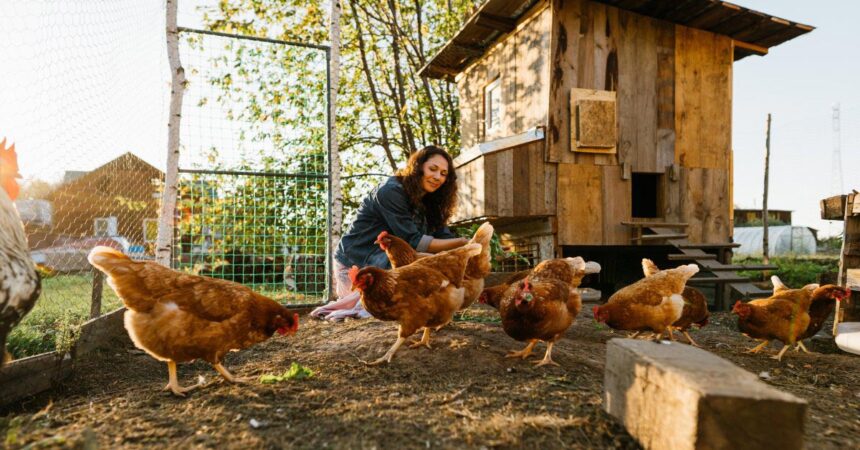
No one tells you how much of homesteading is just… waiting! As a naturally impatient person, I was in for a big surprise. I thought I would plant seeds on Monday and have a fresh salad by Friday. Instead, I got seeds that took their sweet time to grow, kids that have endless energy, and chickens that are far too generous with poop than with eggs.
Somewhere between the poop, pee, and the stubborn soil, I realized that maybe it was not about making things happen, but learning to wait while they did. Whether it’s toddlers, tomatoes, or stubborn hens, I learnt that growth doesn’t take orders – not from me, anyway.
Homesteading didn’t just teach me to be patient; it forced me to be, and here are the four biggest lessons I’ve picked up along the way.
1. Slow Living is Actually Slow
You know when you watch those aesthetic YouTube videos, where a woman in linen pants gently kneads dough, with a soft, contented smile playing at the corners of her mouth. Her kids quietly play beside her, no tattling and no bickering. Then it cuts to healthy chickens, peacefully pecking at the ground, as she gracefully strolls behind them, basket in hand, ready to collect a dozen eggs for the day.
I longed for that kind of peace. The kind that felt slow and sacred. I thought if I could just get here, to the quiet, the farm, the simple life, that peace would wrap itself around me, like a warm, familiar blanket, and I would finally get to experience my own piece of heaven. What I didn’t fully grasp back then was that slow-living wasn’t just an aesthetic, it was literally slow! And that peace I was longing for? It doesn’t just show up all at once, soft and whole. It is rooted in slowness and tended gently by patience.
Having come from the city where everything runs on speed, from fast food to fast transport, fast WIFI, the stillness of homesteading felt like a full stop. At first, it felt frustrating. I would wake up ready to do things, only to discover that the soil was too dry, the cow had wandered off, and the baby had decided today was apparently a no-nap day. Nothing was urgent here. Except maybe chasing after the goats when they jumped over the fence.
But here is the thing: in that painful slowness, something started shifting. I began noticing more. The rhythm of the birds in the morning. The way tomatoes change shade before they ripen. The tiny victories that do not always make it to social media, like a child who finally learns to wipe her bum all by herself, or pours into a cup without making a mess.
I started to realize that life doesn’t always happen in the fast moments. It happens in the quiet, repetitive, often mundane spaces in between. The slowness that once irritated me became sacred. Even though I still have days I wish I could speed up, I’m learning that slow isn’t the enemy of productivity; it’s often the birthplace of real lasting growth.
2. Where There is Poop There is Life
There are days I stand at the chicken house with a broom in one hand and a sigh lodged in my chest. The straw is damp, the smell more alive than I’d like to admit, and the chickens, bless them, have complete disregard for the clean space I try to keep. When it rains, everything gets worse. The floor turns slippery, the scent thickens, and the flies show up for a little celebration. I find myself wondering who on earth romanticized this part of the journey. Because this is not a scene anyone ever shows. No one ever zooms in on the clumpy droppings or records when you gag just a little while scraping fresh manure off the cowshed floor.
When I go back to the house, I’m met with a different kind of mess. One that involves tiny underwear and suspicious puddles. It’s currently potty-training season in our home. In between the proud high-fives for dry underwear and tragic accidents that leave a trail behind, I’m reminded that this is life. Actual, vibrant, pulsing life. Not the filtered version. The raw, messy, smelly, fully human kind.
Poop is a sign of life. It shows that things are alive and working. It’s a signal that systems are functioning, bodies are processing, and growth is happening. As much as I dread it sometimes, some waste is part of the miracle. Whether it’s a child learning to use the toilet or the cow dropping steaming piles at the same spot every morning, it all speaks to movement, metabolism, and momentum.
And yet, how tempting it can be to want all the beauty without the mess. To dream of golden eggs and rosy-cheeked toddlers without ever facing the reeks and stains that come along for the ride. But here is the thing, I’m slowly learning that the mess is part of the miracle.
Life rarely presents itself in neat little packages. It spills and stains, smells and surprises. However, beneath the mess and the inconvenience, life pulses with purpose. That’s what I’m trying to embrace. Not just the idea of a slower, beautiful life, but the actual rhythm of it. The whole of it. Even the messy parts.
3. Little Hands, Big Lessons
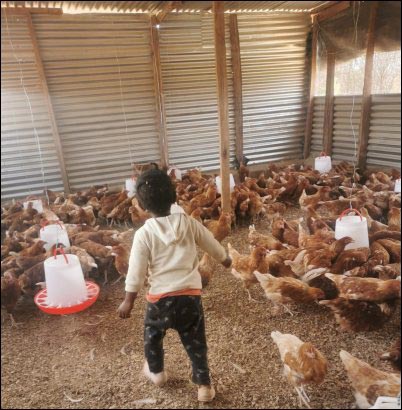
Parenting while homesteading has been its own adventure. My two-year-old, for instance, wants to be part of everything. From watering the plants, to feeding the chickens, even digging the soil with a spoon from my kitchen drawer. What she calls helping often means more spills, more dirt, and a longer cleanup time for me. I came to realize that she wasn’t just playing, she was teaching me something really important.
Through her eyes, the smallest things began to matter: the joy of splashing water on leaves, the fascination of holding an egg that is still warm from the coop, or the thrill of spotting a worm in the soil. She doesn’t measure success in neat rows or perfect harvests; she celebrates the moment itself.
My two older sons bring their own lessons into the mix. They’re full of energy and curiosity, asking endless questions and constantly arguing over who gets the blue shovel. As annoying as it can get, they’ve helped me reconnect with my inner child. They remind me to notice things I might be too grown-up to see, to understand that fun isn’t unproductive, and that every little moment in life is worth noticing.
4. Everything Worthwhile Takes Time (Plus a Little Chaos)
In the time I’ve spent gardening, I’ve realized that growth rarely looks neat from the inside. Roots don’t grow in straight lines. They twist, split, and tangle their way through the soil, pushing past stones and wrapping around obstacles. From above, it looks like nothing is happening. However, given time, those tangled roots become the quiet strength that holds everything together.
Parenting feels the same. My children don’t grow in perfect stages. They stumble, argue, leap ahead, and circle back. Homesteading, too, follows no tidy blueprint—storms undo progress, animals misbehave, and plans shift. At first glance, it looks like disorder, but beneath it all, something steady is taking hold.
Moreover, I’m learning that this lesson isn’t just about my kids, or the garden, or the animals. It’s also about me. I’m learning to give myself the same patience I give the seeds and the children—to accept that mistakes, detours, and even the messy days are part of my own growth. The waiting that frustrates me is the very thing that allows me to deepen. The chaos that unsettles me is the raw material of resilience.
Life doesn’t move in straight lines. It spreads, tangles, and surprises—but always digs deeper, always reaches for light. So I’m practicing trust, both in the process and in myself. Because everything worthwhile takes time, and yes, plus a little bit of chaos too.