


Trapping is one of the most debated forms of conservation. For some, it conjures images of cruelty or outdated practices, while for others it represents a time-tested tool for managing wildlife and protecting biodiversity. Much of this divide stems from a lack of clear information about what trapping actually is and its role in today’s ecosystems.
This article explores trapping from a conservation-focused perspective, showing how regulated trapping supports ecological balance, safeguards homesteads, and contributes to healthier habitats. By combining insights from wildlife agencies with hands-on experience, I aim to provide readers with a grounded understanding of how trappers fit into the modern ecological food web and how anyone interested can responsibly get started.
Conservationists: Stewards of the Natural World
Some people think that protecting natural resources means not using them at all, but Aldo Leopold (the father of wildlife management) points out that when we begin to see ourselves as part of the ecological food web, we begin to use our resources with discretion. We must be active participants in the ecosystem, not just watchful observers.
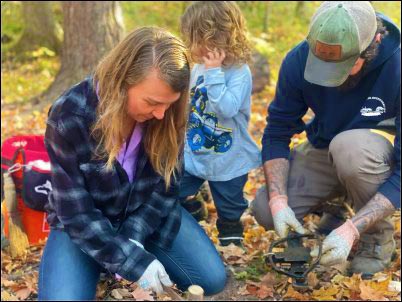
How does using natural resources, such as fur-bearing animals, contribute to conservation? Hunters and trappers follow regulations designed to maintain the environment’s carrying capacity, which is the maximum population size that a particular environment can sustain at its lowest level of food available. Every fur-bearing animal has a certain season when it can be harvested, which takes breeding habits into account, as well as a bag limit that determines how many can be harvested from an area. This protects wildlife from being overharvested, while also limiting how large their populations can grow. These regulations protect both humans and animals from unnecessary interactions in urban areas.
A Trapper’s Impact
I was drawn to trapping because it is such an effective way to manage and diversify the native habitat that surrounds our homestead. I get to be a steward of the natural world by taking inventory of the plant and animal species that we share land with through my daily observations. We do our best to diversify the native plant and animal species that encompass our acreage because a diverse ecosystem is a resilient one. If there is an abundance of raccoons and skunks on our property, we see a decline in the number of wild turkeys. On the flip side, if there aren’t any turkey-eating predators at all, turkeys can damage neighboring crop fields.
Recent studies show that raccoon pressure and the benefits of removal are site-specific. Raccoon densities in rural habitats can range from roughly 2 to 5 raccoons per km², so not every landscape needs intense removal. Focused removal at vulnerable sites has produced dramatic short-term results (for example, sea-turtle nest depredation on Panther Key dropped from ~76–100% to 0% after removals). However, benefits can decline after 2–3 years as animals immigrate or other predators fill the niche, so trapping should be paired with habitat adjustments and continued monitoring. Finally, most published removal experiments have been done on conservation sites rather than generic homesteads, so private-landowners should proceed cautiously, keep good records, and adapt practices to local conditions.
Someone could argue that nature has systems in place to keep animal populations in check through starvation, disease, or predation. However, there has never been a time in our history when we didn’t utilize animals as natural resources, so do we really know if nature would just balance itself out? The problem with this line of thinking is that it suggests we are not part of the ecological food web. Trappers do not seek to remove all predators from an area—we know there must be a healthy ratio of predator to prey species.
An example of trappers bringing balance back to an ecosystem was a fox-trapping management plan in eastern North Dakota and eastern South Dakota. Several foxes were removed from these areas, which restored the dwindling duck population. Ducks are considered ground-nesting birds, making them easy targets for predators like foxes and raccoons in the spring.
Regulated Trapping and Animal Welfare
To become a trapper, it’s important to understand the complexities of the ecosystem. Trapping has an ugly past—overharvesting, no concern for animal welfare, and greed—but today’s trappers are required to take an educational course to learn regulations before they can obtain a license. There are strict rules in place that determine which types of traps can be used on land or water to reduce the number of non-target animals being trapped. The traps of today are designed to hold the animal in place, unharmed, so they can either be dispatched or released. Trappers must also check their land sets daily to limit how long an animal is held in the trap.
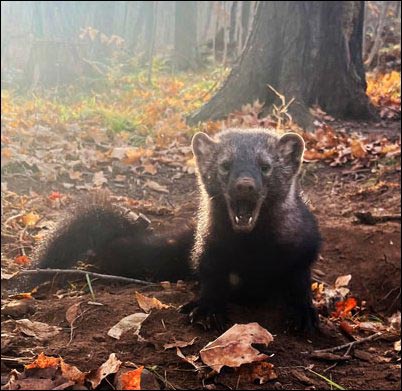
So, if federal and state agencies highly regulate trapping, why do we do it? There’s very little money to be made through trapping, so most participants are not driven by greed. For most of us, it’s an instinctive urge to be connected to the land around us, and we feel a responsibility to help conserve our natural resources—even if that means following strict regulations.
How Does Trapping Benefit the Homestead?
We’ve all heard the advice to plant flowers to attract pollinators to the garden, but not as many people talk about the benefits of diversifying animal species around the homestead. Removing a few predators (raccoons, skunks, foxes, or coyotes) every year improves the biodiversity of prey species such as ground-nesting turtles, birds, and rabbits. Improving biodiversity benefits the functionality of the ecosystem through pollination, nutrient cycling, and decomposition. It also improves an ecosystem’s resilience to withstand disturbances such as disease outbreaks or climate change.
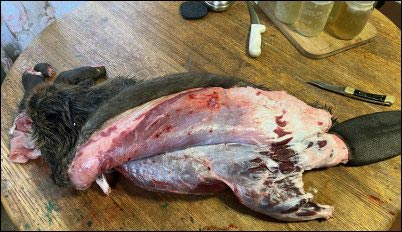
Animals such as beaver, raccoon, and muskrat can be delicious when properly prepared, but the less desirable animals can be fed to chickens or pigs to diversify their nutrient intake. In the winter, when bugs are unavailable to our chickens, we feed them the remains of the seemingly healthy fur-bearing animals we harvest as an alternative protein source.
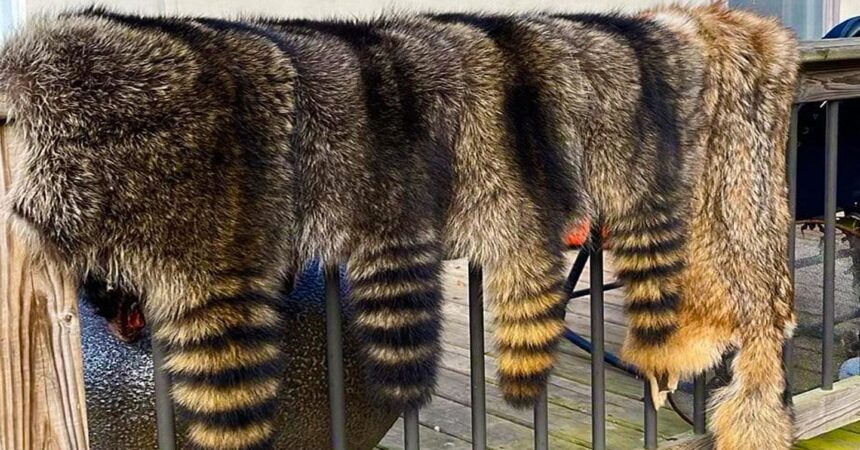
Wild-harvested fur has become a desirable textile again due to its sustainability. Unlike polyester, it breaks down and decomposes when discarded, and it is considered a renewable resource. Strict trapping regulations are in place and regularly updated to protect this resource from becoming threatened.
How to Obtain a Trapping License
Trapping is one of those skills that less than one percent of the population participates in, but those who have this skill are usually eager to pass along their knowledge. Finding a local mentor who is willing to let you ride along on their trapline is a priceless form of education. You will still need to take a trapper’s education course provided by your state’s Department of Natural Resources (DNR). You will learn the rules and regulations of your state to be eligible to purchase a license. It varies by state, but you must have a license to trap any animal on your property.
Use a search engine to find the closest DNR office and sign up for the in-person class. In most states, you can also sign up for an online class, but many students in the class I took said it was very difficult compared to learning in person. Doing the in-person class also allows trappers to connect with each other and trade tips and tricks to enhance their skills. Trapper’s Education will walk you through the basic equipment permitted in your state. Trap types and sizes vary, and if you’re ever in doubt, call your local conservation warden. They would rather spend their time educating people about legal equipment than issuing citations.
Scouting for Sign
Prepping for the opening day of trapping season in the fall begins long beforehand with scouting for animal sign. It starts by knowing the food web and taking notes of areas with natural food sources for target animals. This involves learning how to identify native plant species, which helps determine what prey species are present and, in turn, what predators are nearby. For example, an open, sunny location is a great place for berries to grow, and raccoons love berries. It also helps to learn how to identify animal scat and tracks so you don’t have to guess about which animals are in the area. We usually know where we will build our trapline long before the season starts, which saves time in the long run.
When we know which animals we will target through year-round scouting, we build our trapping tool bag accordingly. Animals of the canine species are the hardest to trap, and many seasoned trappers suggest starting with raccoons because they are so abundant. This helps build confidence on the trapline before pursuing other animals.
Raccoons are opportunistic omnivores—they will eat berries, nuts, small mammals, frogs, fish, and even trash. A raccoon track is comparable to a tiny human hand; it has five sausage-shaped toes on each foot, connected to a C-shaped palm pad. Their scat is cylindrical in shape, has broken or blunted ends, and is usually dark in color. In the fall, you might observe bits of undigested food in it, such as berry seeds.
What’s in a Raccoon Trapper’s Tool Bag?
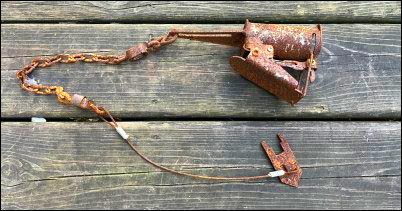
A typical raccoon trapper’s tool bag consists of (but is not limited to): dog-proof coon traps (DP coon traps), J-hooks with a J-hook tool (to attach the anchoring system), an anchoring system, bait (cat food or a piece of donut), a stake driver (to pound the anchoring system in place), hammer, and gloves. You could use a live trap as well, but I have found it impossible to keep my chickens out of them. The dog-proof coon traps are perfect in almost any scenario.
You can get DP coon traps at most feed supply stores, but there are also small business trapping suppliers such as Hoosier Trapping Supply, Minnesota Trapline Products, and F & T Fur Harvester’s Trading Post. The benefit of ordering through a small trapping supplier is that their employees are trappers and can help answer your questions. There is always the option of finding used traps through word of mouth or an online marketplace. Going this route can also help build connections with experienced trappers in your area—you may learn a thing or two.
How to Make a Set
Trappers follow many rules, but one of the simplest is to set on animal sign. This increases your odds of catching your target animal because many will revisit the same places if they’ve found food there. If you can find a path they use, set your trap nearby. Pack some bait, such as cat food or a sweet treat, in the bottom of the dog-proof coon trap, drive the anchoring system into the ground, and pull up to lock it in place and test for security. Next, set the trap either with your hands or by placing it on the ground and using your foot to squeeze the trigger so it locks in place. Point the opening in the direction that raccoons will see it. The trap has a trigger system that is set off when they try to pull the bait out of the tube. After your first successful catch, repack the trap with bait and set it again. Raccoons live in groups, so chances are you’ll catch a few more in the same spot.
A Few Closing Thoughts
The largest hurdle for trapping acceptance is a lack of information. I still see people on social media arguing that it’s necessary to trap and kill coyotes because they will eat all your livestock, but that approach generally closes the door to understanding. Leading with fact rather than emotion seems to be the best approach.
When you become a trapper, you have a responsibility to maintain a respectable image in the public eye for the sake of all trappers. This means understanding your critical role in the ecological food web, knowing your state’s regulations and adhering to them, and obtaining your license before you begin your trapping journey.