


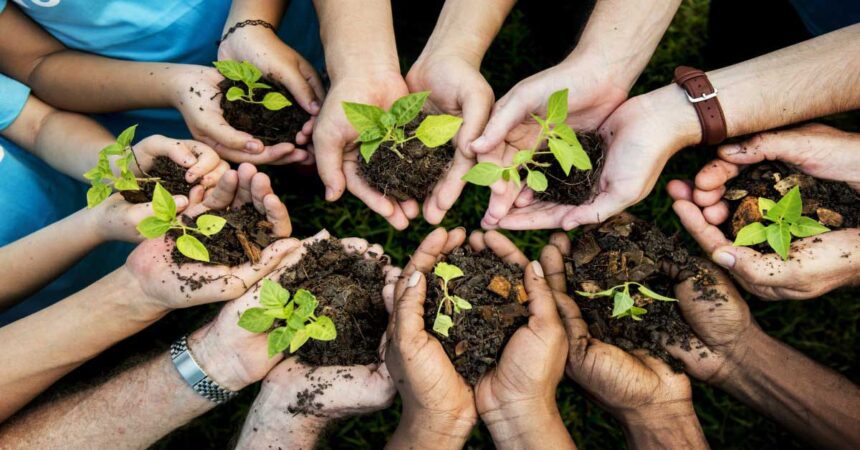
Like all rewarding endeavors, homesteading on any scale can be difficult and has a learning curve. Yes, there are books and YouTube videos, but these can make homesteading projects even further out of reach. I had all but given up on the idea of composting—YouTube videos made it seem extremely complicated. Luckily, I knew someone who had been composting for years and she was happy to share her knowledge with me. That’s the advantage of a homestead community—someone is there to walk you through your first attempts at a new project and you can reciprocate with your unique knowledge.
We’ve become accustomed to online groups and forget that there was a time in the not-so-distant past when there was no internet. That’s right—books and other people were our sources of information and it worked well. While I think online groups do have their advantages, they are best when used as a supplement for offline communities.

A community is simply a group of people with similar interests and values who work together to create something bigger than themselves which they could not create on their own. It is important that interests and values be similar but, for a truly dynamic homestead community, you don’t want them to be identical. People homestead for a variety of reasons: environmental concerns, food safety and security, greater autonomy, and freedom from the 9-5 are just a few of the reasons people are drawn to this lifestyle. The reasons for homesteading influence the type of homesteading projects and the resulting expertise. If you insist on only admitting people into your community who think and do exactly what you do, you will not learn anything. And one of the main purposes of a homesteading community is to grow your skills and become a better homesteader. You will want to be clear on your group’s overall mission. Your group could focus on community service, teaching and learning new skills, or a simple social club.
The best communities are those that help their members achieve their personal goals. A planning meeting held once or twice a year where each member talks about the big project they are undertaking is an excellent opportunity for members to understand the goals of their community and to offer and receive assistance. The group could even schedule work days and work as a group to accomplish some of the bigger projects.
Your group will likely start out small and it may remain small depending on your location. That is ideal. If your group becomes too large, you may want to break it up into small-scale meeting groups. It is difficult, logistically, to bring together a large number of people and run a successful meeting where everyone gets a chance to be heard. Small groups are usually more tightly knit as each person feels a responsibility to care for the other people in the group.
Another key to successful community-building is to provide experiences rather than just meetings. Having the same meeting format every time quickly becomes superficial and boring, and these are the types of groups where one or two dominant personalities can easily take over. Shared experiences create and intensify bonds and allow everyone a turn to establish and share their expertise on a certain topic.
Equal participation is important. That doesn’t mean everyone participates in the same way, but that everyone is able and encouraged to participate in the ways they are most comfortable with. As an introvert, I don’t talk a lot even under ideal circumstances, so if I see others are being shut down or talked over, I won’t speak up although I have something useful to contribute. Find a system to encourage and empower each member of your group.

When we think about experiences, we tend to think they need to cost a lot of money. Not only is this not true, but it is antithetical to homesteading values. In addition to community work days, some shared experiences could be a regular drop off of produce, eggs, honey, and homemade food to the local food pantry. Your group could host seasonal farm-to-fork dinners for the community. You could host a “homestead crawl,” much like the pub crawl. You could teach specific courses (raising bees, shearing sheep, canning tomatoes), or have each member write a how-to guide and put them all together as a book. The sky is the limit.
Closely related to shared experiences are rituals. Rituals are considered the glue that holds groups together. Again, they do not have to be elaborate or expensive. To be a ritual they only need to be enjoyable and consistent. We all know homesteading can feel lonely at times. Having community rituals can lessen this sense of loneliness, create and strengthen relationships, and remind us that we’re all in this thing together.
An important aspect of any community group is community service. Luckily, this is a value all homesteaders seem to share. There are so many service opportunities and a lot of them are often overlooked because the more common service projects are the ones we all think of first. Yes, donating food to a food pantry is wonderful, but did you know domestic violence shelters also take food donations? Another service possibility is to act as a host and mentor to a child who wants to participate in the FFA but doesn’t have access to animals. Many elementary classrooms go on field trips to farms but a lot of the time the special needs classes aren’t allowed to come due to liability issues. If they can’t come to you, can your group find a way to go to them? If you pay close attention and keep your ears open, the hidden needs in your community will become visible and your group will be in a good position to creatively fill those needs.
Although this has been about offline groups, an online presence isn’t a bad thing. If you want to provide easily accessed information regarding different events to the community, online is the way to go. Do you have a writer in your group? How about a photographer or an artist? They might be interested in setting up a blog on the site. It is simple to add an online store to your website and allow group members to sell their wares online.

Regardless of the structure or activities of the group, make sure people are relaxed and having fun. We are too stressed out, too anxious, and too serious for our own good. Have fun, give and get help, meet new people, and learn something new. Even an introvert would have trouble passing that up!