


When I first bought this house, I would sit around on the weekends watching home repair shows and then get started on whatever they had inspired me to do for the day. I watched Dean Johnson and Robin Hartl, the hosts of the home improvement show “Hometime,” fixing leaky pipes and smashing through walls with sledgehammers, and I said to myself, “Hmm, maybe I could smash through a wall and make an extra window; they make it look so easy!” As it was, my walls were made of log, not smashable plaster, so I cut instead of smashing, but I’m saving the rest of that story for my next article on cabins with vertical logs.
My point is that I guess these people from shows in… 1994! God, I’m old! …inspired me to believe that I could do just about anything myself if I just had a chance to see them do it once on TV. And as it turns out, we now also have YouTube, so we can look up how to do something and watch it again and again. Yep, that’s how old I am. Older than YouTube!
I’m 66 years old now, and through buying this as a fixer-upper and owning it for 30 years, I have learned how to do an awful lot of things that people often pay professionals to do. Yes, I’ve made mistakes, and many things will never look as good as they would have been if done by a professional, but they never would have been afforded if they had needed to be done by a professional, and they are good enough for me. And I have to selfishly say, “me” is all that counts in this situation. People and relationships come and go, but this house is my solace, my retreat, the place I have designed specifically for me and however many cats I choose to have at any given time. Two for now, and perhaps a few too many in the past. Because of my love of the woods, I’ve cut holes in the walls and installed more windows, and because of my love for my cats, I’ve built a large wire enclosure for them out back, screened in my front porch and put cat passageways in every door in the house so they can visit me if I’m in the bathroom, bedroom, or porch, but never get out and be eaten by bears.
So, what DIY repairs have I learned over the years? Well, first there was plumbing. Oh, lord, lots of plumbing when you consider the pipes under both sinks were rusted out when I first moved in, and there were small leaks here and there, and then there were the frozen pipes each winter and just all of the little things that happened over the years like water heaters springing leaks (lesson learned with that one: no amount of epoxy will seal a leak in a water heater. Better off cutting it in half and turning it into a planter.)

I glean what knowledge I can not only from YouTube videos and TV shows, but occasionally from those I think are knowledgeable on the topic. Unfortunately, as a woman, I’ve often had men assume that I am asking them for help when I only want advice, and I’ve also endured the assumption that I must not have any knowledge at all since I am asking, and that I “really should call a professional.”
“A plumber will do it for you in an hour and only charge $200,” said a friend that I called for a little advice. That’s when I realized I’d rather spend a few more days in my basement, grunting and twisting to try to get that one pipe loose than to pay “only” $200!
Professional-assisted DIY Repairs
But one time, ONE time! I decided to call some plumbers because my water lines froze and broke, and I was struggling to loosen a particular pipe because it was between two other pipes, and I couldn’t figure out which way to turn it. So, I ended up calling plumbers, and they did pretty much what I had thought of doing, but was warned against by another advisory friend. They cut a pipe. If only I had had the confidence to cut that pipe, I would have saved myself $200. But where I did save some money was by telling them that they could fix my plumbing up to a point (my $200 limit), and I was perfectly capable of handling the rest. That worked out well. They finished with the pipes, and I replaced the faucets that had blown out. I’m not sure if “blown out” is the correct word for it, but they do tend to get stopped up and stop working after a big freeze, or after all of the rusty water flows back through and clogs them up.
But the next thing these plumbers did was introduce me to the miracles of PEX pipe, and how easily it can be put on with a tool for cutting the pipe and crimping a sleeve around it. There is also an insert you put inside, kind of like fixing your garden hose. I was feeling intrigued and began wondering if perhaps I should invest in the gadget for doing this, which seems to vary in price from $20 to $80 or more. Hmm… I believe it depends on how much you plan on using it, and if perhaps it isn’t cheaper to go with the tools that you have. I’m still considering the idea. But how will I know if a $20 tool will work, or if I have to buy the most expensive one? I suppose that is a question with all tools, though. And I guess I probably spent as much or more on all of my pipe wrenches. Perhaps those who are just getting started should consider which will work best for their house.
Oh! Here is one of the most important DIY repairs I learned for plumbing, and I only learned it a couple of years ago. If you slide an old piece of pipe that is a couple of feet long over the end of your wrench handle, it will give you more leverage to provide torque for turning the wrench. In essence, it seems like it gives you double the strength that you had. It has helped me unstick pipes that I couldn’t budge with my wrench alone. In fact, they make lengtheners for the lug wrench you use to loosen the lug nuts on your car when changing a tire, too. That way, you can throw your whole body into turning those lug nuts when the mechanics make them too tight with their pneumatic drills.
The flow of water through pipes usually makes sense to me, so I’m much more willing to fool with plumbing than electricity. However, I have learned how to rewire a plug or two and fix a few things. What’s my secret for avoiding electrocution? I turn off the main breaker with no trust for the way things are labeled in my handwritten, scribbled-out, and revised breaker box chart. So, I do all electrical DIY repairs during daylight with a flashlight.
But once again, it has been YouTube to the rescue when I’ve needed to take something apart and try to repair it. For instance, I learned that a simple switch on my washing machine kept it from starting one day, and all I had to do was remove that switch. The purpose of the switch was to stop the machine from spinning when you lift the lid. So now all I have to do is remember not to stick my hand in the washer while it is spinning. Duh. Luckily, I don’t have any kids in the house.
I managed to fix my dryer by watching a YouTube video as well. Unfortunately, I had a few screws left when I put it back together, so now it squeaks a bit while running, but it has been 15 years since I fixed it, and it is still working. When I dry my clothes, I just shut the door to the laundry room and tell the cats to cover their ears when I turn it on.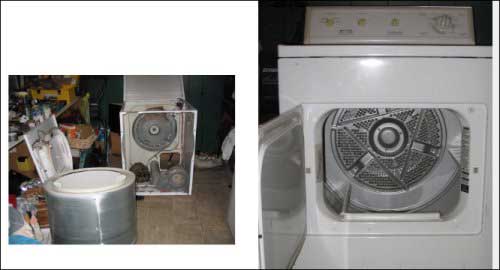
You can learn a lot from watching YouTube videos, but at the same time, it is just like politics. There will be those who are helpful and those who dispute them, those who want you to learn from their experience, and those who want you to call a professional… such as themself.
For instance, when my muffler rusted and fell off my car, I watched some YouTube videos before buying a new generic muffler and replacing it myself. But I also found some competing videos where mechanics showed themselves under cars banging on parts of the exhaust system with sledgehammers in an effort to prove that if a muffler was rusty enough to fall off, then the rest of the system was probably too rusty as well and was probably ready to fall apart.
Personally, my car is so old that there is no telling what might go wrong with it next, so I see no need to invest $1,000 in a new exhaust system. My muffler is hanging in fine so far.
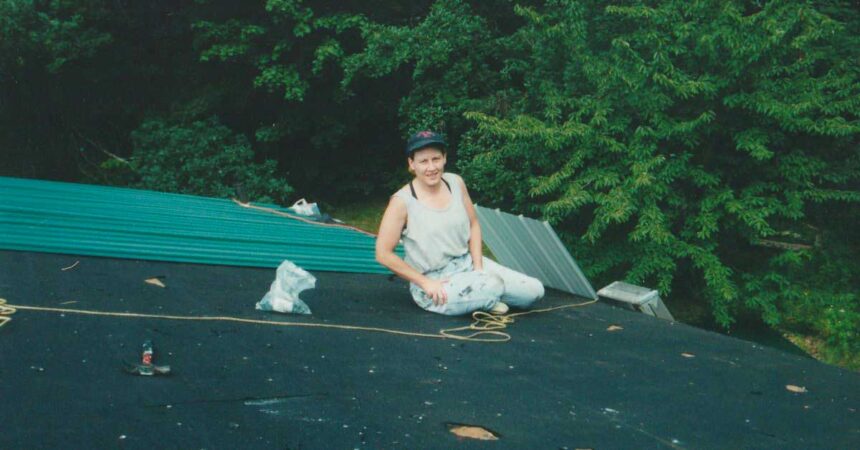
I have to say that I am constantly astounded at how much people pay to have new shingles put on their roof, and I believe that I have probably saved the most by doing that myself. And aside from having no labor expense, another thing that made it more cost-effective is that I didn’t do it all at once. I was doing my very best to avoid credit card debt at the time, so I used my $500 tax return to buy enough supplies to do one side of my roof, and I did the other half a few years later after saving up more money. The cost of the roofing materials has probably gone up quite a bit since I bought this house in 1994, but you can’t beat the cost of labor: zero!
How did I do it? I was familiar with the process of hanging asphalt shingles because I had helped a friend hang a few shingles on his house as a repair, so then I started doing the math to figure out how many shingles I would need. Then I started looking into the cost of metal roofing and the ease with which it could be put on, and I decided upon that. Instead of nailing up dozens of 12’ by 36” shingles and overlapping them, all I had to do was screw up about 10 sheets of metal on each half of the roof. They only weigh around 20 pounds each, and I’m the kind of person who would rather hoist more at once rather than climb up and down and up and down with loads of shingles on her back.
For the first few days I had a good friend helping me, but he mostly took part in helping me yank the old shingles off the roof. I finished the other half a few years later, after the internet was invented and I learned that you don’t need to remove the shingles before putting on a metal roof because the metal is less heavy than shingles. Metal roofs weigh between 0.7 and 1.5 pounds per square foot, while asphalt shingles weigh between 2 and 5 pounds per square foot. Gee, how about that!

As with everything, I wouldn’t say I did it perfectly, but I did it perfectly acceptably. One half of the roof may appear upon inspection to be a half inch higher than the other side, (since there are still shingles under one side) but you’d have to look pretty hard to tell, and I’m not out thousands of dollars for labor.
As I write this, I’m planning to drag an old hose into the house to snake out my washing machine drain hose. Something I sort of learned from a neighbor. He had a big, long PVC pipe that he pushed into the straight part of my drain hose in the basement in order to push out any blockages. I never would have thought of that. I would have thought I needed something more solid rather than hollow, or that I needed to buy some sort of professional auger, but it worked! So that gave me the idea to use a stiff garden hose and just cut the metal end off so that it would fit through the curved parts of my drain hose. It works like a charm!
With each new project you learn something new and actually have a strange hope in your mind that you will somehow need to do it again because you are proud of what you have learned, even though you are totally exhausted and hope that you won’t have to. Is that what you call cognitive dissonance?
Where to find Materials for Cheap (or Free)
- There are places where you can rent a kabuki tractor and ride it down the street with just a driver’s license. Who would have thunk it? I did this when I decided to order a load of crusher run gravel to fill the lumps in the private road up to my house. I’m not sure if anyone was watching, but I waved my hand like royalty as I drove it up the street. I did manage to tip it over once, but it has these pneumatic feet that you can use to lift it back up. That doesn’t mean I didn’t fall though! More like a jump, I guess. I was young and spry at the time.
- Many auto supply stores and home improvement stores have tool loaning programs
- If you find the right people in charge of demolition with the city or county, sometimes you can get hold of stuff from old houses. That’s how I got the super-cool, old-fashioned, iron, crank-out frames for my picture windows.
- Another place to find free boards is inside the things you would normally throw away, like old mattresses and couches. They are made up of slats of wood that can be used for shelves and all kinds of things. And by breaking them apart to save the wood, you save on the cost of dump fees.
- Free pallets are another way to get cheap wood. Lots of companies advertise that you can have them so they can get rid of them.
- Searching for things on the side of the road. One man’s trash is another’s treasure! That chair might be fun to reupholster!