


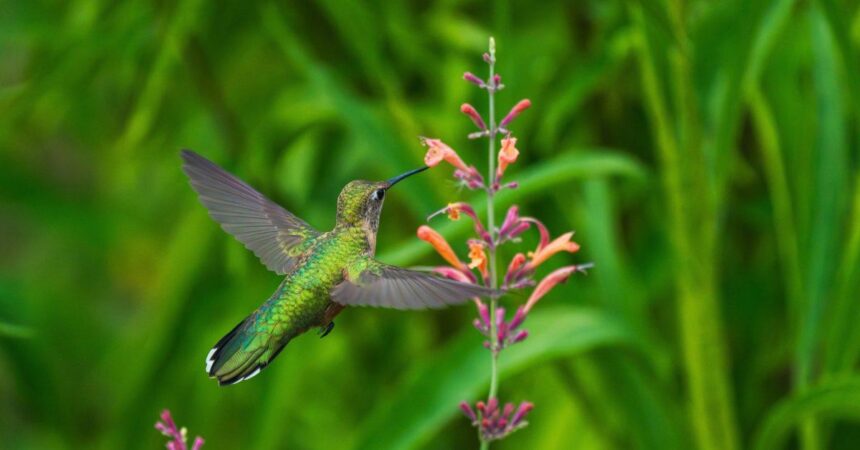
Knowing where to begin when you just want to experiment with the act of growing, when you have the itch to spend summer evenings generating a little harvest or trying to see if your soil will yield anything edible, is a common conundrum. Here are three easy and interesting crops for beginner homesteaders that most people overlook. All three featured plants are prolific producers suitable for a small garden or expansive farm.

1. Self-Heal (Prunella vulgaris)
My all-time favorite herb that grows on the land I farm is Self-Heal. Unassuming and low to the ground, I’ve never had a visitor who recognized the name. Yet I can think of nothing easier to grow or which yields such a harvest in exchange for so little effort. For beginner homesteaders looking for a reliable plant or food crop that they won’t kill, my #1 answer is self-heal. After other herbs and flowers have departed for the dormant season, I can always trust the self-heal to keep producing. Self-heal often keeps right on thriving in the summer if I forget to water it, and I can attest it won’t hesitate to grow under autumn leaves that block the sun if they haven’t been moved at the start of the growing season.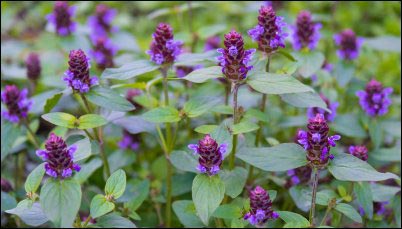
Self-heal has faced some opprobrium for being invasive, and many online correspondents caution against self-heal for its reported tendency to spread and become encroaching, as members of the mint family are wont to do. This has never been my experience. My self-heal grows alongside its neighbors without ever choking them, and while enhancing the soil for surrounding plant life. It’s true that my self-heal has over time, become a larger bunch than the small starter I originally planted, and it has spread out somewhat, but isn’t that what you want a healthy plant to do after years when it’s providing such consistent turnover for you? It is now about half a square foot, but it doesn’t seem to be spreading at such a rapid rate that I would be concerned that the rest of my garden doesn’t have a chance.
Self-heal (sometimes called heal-all) will grow easily from a cutting and is a great way to experiment with the art of getting new cuttings to root to eventually sell or share. Self-heal is an ideal plant to learn through for would-be homesteaders because it yields a dependable number of greens and can be used to grasp the basics of propagation.
When people do know about self-heal, it’s typically due to its role in immune support. People grow self-heal for tea and healing poultices to improve challenges like psoriasis and to make use of the way self-heal soothes mucous membranes, supports lymph health, and is antiviral. Self-heal ameliorates a variety of conditions and has been used for hundreds of years by different cultures for vastly different treatments. It is full of antioxidants and is anti-inflammatory, and the rosmarinic acid and rutin protect against cell damage and are neuroprotective.
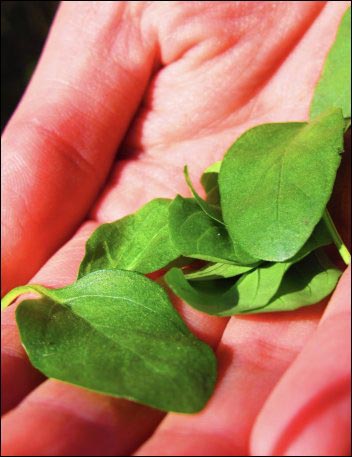 All of this is fascinating, but I have learned in my time with self-heal that it can be used to great effect as a trusty salad green. The young, tender leaves in raw salad or blended into smoothies, as you would spinach, can offer more plentiful advantages per leaf than traditional greens.
This information can be useful for families trying to get the most vitamins and minerals into their children per bite. Self-heal leaves offer a broader array of vitamins and compounds than your typical lettuce or spinach leaf. Self-heal provides far more nutrient-dense vitality than, for example, lettuce, because lettuce is—for better or for worse—predominantly water.
Self-heal is rich in trace elements, which protect your bones and teeth and keep more children and adults free from cellular damage, as well as cognitive and mood decline and metabolic dysfunction. Self-heal is a proficient provider of vitamin C, which enables you to directly absorb the iron it offers you. Self-heal provides vitamins A, C, and K along with multiple types of vitamin B, as well as phytochemicals, which promote endothelial function, and carotenoids, which boost vision and skin health in humans.
Self-heal isn’t just outstanding in salads but fantastic for adding into soups and roasts as a traditional “pot herb” you can toss in with other cooking vegetables. The flavor is described by some as bitter, but I have always found it somewhat sweet and agreeable to the palate, especially when combined with salad or stew ingredients.
If I intended to start just one food crop to inaugurate a growing journey, I would undoubtedly choose self-heal. Nothing offers as much nutritional support and harvestable abundance for so little time and effort. Self-Heal is the number one ingredient for self-sufficiency and personal production success as a food farmer that I can recommend, and I wish for you all the self-betterment it can provide.
2. Hummingbird Mint (Agastache cana)
Another botanical friend I could never imagine my gardens without is the beautiful and steadfast Hummingbird Mint. Also called Giant Hyssop, this little plant brings many of the assets beginner homesteaders are thirsty for: lovely color, pollinator attraction, a sturdy perennial that comes back every year without being asked or prodded, a gorgeous cut flower that makes a vibrant and textural addition to any bouquet, and an edible crop that you can experiment with while you’re getting your feet wet farming something useful.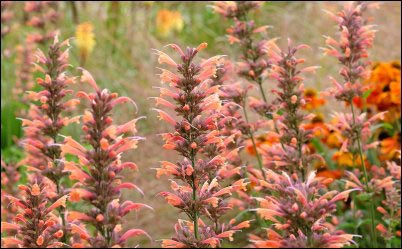
Hummingbird mint in any salad gives it an instant culinary upgrade, while hummingbird mint dried as tea leaves gives your nightly hot drink a distinctive liveliness without caffeine. One reason this plant is a piece of cake to grow and keep around is that the aromatic oils in Hummingbird mint are an automatic deer and rabbit deterrent. Unlike a lot of fruits and flowers appealing to new homesteaders in search of a first plant to try, hummingbird mint has its own built-in system to ward off common pests and browsers. Despite its name, this is a vertical specimen of mint that grows straight up and does not spread aggressively like other mints. It’s extraordinarily drought-tolerant and will thrive in the hot southern sun without regular watering, which is one of the things that makes it uncomplicated for beginners. This is a plant that can be forgiving with newcomers.
Young hummingbird mint leaves are tremendous as garnish, and I love to throw them fresh into my mouth. It’s one of the closest leaves to candy. While not expressly sweet, it’s sweet adjacent with citrus, mint and licorice notes. It’s also a novel addition to a summer salad, especially when paired with strawberries or mandarin oranges and poppy seed dressing on a bed of other greens. This is another leaf, like self-heal, which you don’t hear about much as a salad crop but is charming when put to use that way.
Hummingbird mint requires precious little upkeep after its initial planting, and it’s a species that makes an excellent marketable product. Growing hummingbird mint is remarkably simple and yields many leaves per stalk to be dried and made into a unique tea with a memorable flavor profile. It especially makes the perfect iced tea and would be the ideal ingredient for a secret recipe iced tea blend to pass on to your grandchildren or impress your neighbors.
Hummingbird mint has something that nothing else has, as far as smell and taste. A zing that is not sour, and a spice that does not burn, but brings the right amount of pizzazz. The taste of hummingbird mint is not only welcoming as iced tea should be, but also imparts vivacity. I can always count on a bountiful yield of hummingbird mint leaves to dry well and make the perfect gift packaged up for Christmas and Mother’s Days or slipped into a thank you card.
It also piques the interest as a crowd pleaser if you’re looking to sell a tea crop. It’s not your run-of-the-mill green or mint tea, but something all its own. It’s a great starter project if you’re looking to begin with just a couple of plants to yield a crop from, to drink a tea every night that you grew yourself or to start a gardening project with kids who will get excited about caring for a plant with such aromatic properties that they can collect, dry and give as gifts themselves.
Hummingbird mint isn’t only an efficient and low-maintenance pollinator attractor but also one of the most delectable herbs for making iced tea. Hummingbird mint has a rustic, porch-swing aroma that lends itself well to making herbal tea gifts to give or sell year-round. It can quickly become your signature flavor or signature scent and set your gardens apart from the start. The complex aroma is compared to anise by some and fennel or blood orange by others. It may be that hummingbird mint smells a little different to and invokes different memory stimuli for everyone. It could also be a divine and novel addition to homemade potpourri blends or sachets to freshen drawers. The gift ideas are endless when it comes to utilizing these abundant leaves!
3. Mock Strawberry (Potentilla indica, formerly Duchesnea indica and referred to as such in much medical research.)
Mock strawberry is something I’ve never plante. Unlike the others on the list, which I purchased from Celtic Frost Herb Farm (I would highly recommend ordering from them on Etsy if you don’t live near enough to buy from them in person. They have the best quality plants!)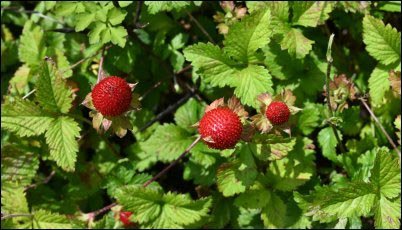
Mock strawberry grows wild around the southeastern United States, and most people I know consider it a useless weed. It’s often cited as bearing inedible berries because the flavor of the fruit isn’t as sweet as the strawberries we are all used to. I’ve never been one to throw out a profuse producer of greenery, and after doing some research, I found out the berries aren’t inedible at all, just not everyone’s taste. Big difference!
Some sources cite them as dry, but I’ve eaten them for years and have found they are only dry after sitting too long, as any other berry would be. There is no inherent dryness to them, and, when in season, I find them perfectly juicy.
If you’re like me and mock strawberries have taken over as ground cover in parts of your yard, I would suggest putting them to good use, as they often thrive on their own with no maintenance, in rain or shine, sun or shade.
The leaves can be harvested for tea throughout most of the year, while the fruit is amply pleasurable in jam-making and for pies, as well as cheerful, colorful, often free and safe/edible cake-topper decor. The berries offer a variety of health perks, such as insoluble fiber, and if they are growing free of cost on your property, you might as well throw them in your daily smoothie. Many a seasonal crop of mock strawberries I’ve actually found more flavorful than frozen strawberries from the supermarket as a smoothie or milkshake ingredient.
You can easily tell mock strawberry from wild strawberry (Fragaria virginiana), or domestic strawberry, because it’s set apart by 5-petaled, bright yellow flowers that greatly resemble buttercups, versus the white flowers of Fragaria virginiana. When the fruit comes in, the berries are a round shape rather than the heart-shaped strawberries most of us are familiar with.
While I regularly consume, freeze, and use the fruit, my favorite thing about mock strawberry is the leaves. Studies have shown that strawberry leaves across all varieties have higher bioactive phytochemical content than the fruit. The vegetative part of the plant, typically discarded, represents a large source of underutilized bioactive biomass, according to a 2023 study published with the National Library of Medicine.
Mock strawberry leaves provide antioxidant polyphenols like quercetin, kaempferol, and tannins, which many people today spend money to supplement with when they could be using the leaves of the mock strawberry growing behind their homes. They have more significant benefits than the fruit, as well as being more prolific than the fruit and easier to come by. Mock strawberry leaves provide antioxidants which fight oxidative stress, limit inflammation, and reduce the risk of chronic diseases in humans.
In addition, several studies show promising anti-cancer activity in mock strawberry leaves. They have been studied for their use in stopping cancer multiplication and inducing programmed cell death. A study from May 2019 from the Journal of Food Biochemistry Volume 43, Issue 7, by Bolin Xiang and Qiyi He, took neutral polysaccharide from D. indica and found the mock strawberry neutral polysaccharide to exhibit “significant antioxidant and antitumor activity.”
With so much possible internal use to humanity when used as a tea, not to mention a hearty, delicious taste when boiled, and a crop that costs nothing for many people, there seems to be no reason not to make use of this darling specimen as a budding homesteader.
You could also try making a healthy and tasty tea blend to drink, sell, and gift by growing all three and combining the leaves of these unusual and easy-to-grow plants. Enjoy making these ingredients your own, and happy gathering!