


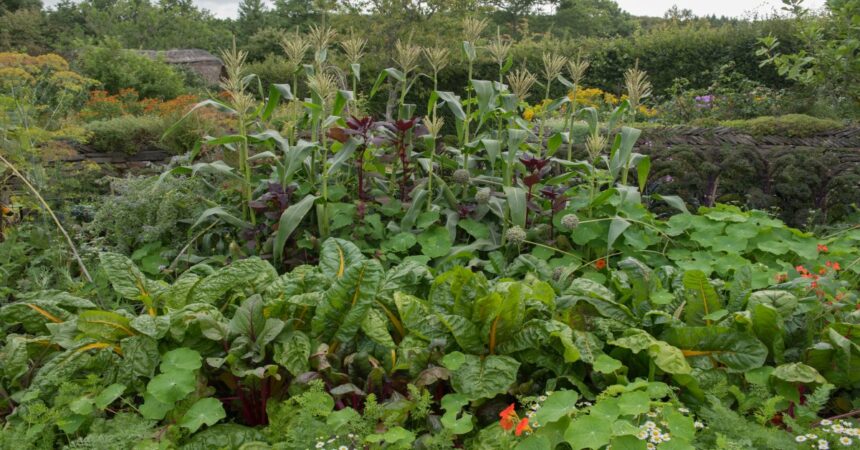
Homesteaders should never be lumped into a single category—we differ in interests and ideology as much as day differs from night. One thing we all seem to have in common, however, is the desire to grow our independence by producing our own food. Whether you have a postage stamp-sized garden or acres and acres of crops, we can all agree that good, healthy food requires good, healthy soil. Once a fringe movement, we now know organic gardening is the absolute best way to improve soil quality and produce healthier produce.
Permaculture is a term generally used to discuss organic gardening. Rather than hard-and-fast rules everyone must follow, permaculture principles act more as guidelines. Each principle allows the gardener to decide for themselves how to incorporate it into their life. The top tenet of organic gardening—no chemicals—applies, but what you do instead of using chemicals is up to you. In permaculture, everything starts with the soil. By creating, maintaining, and nurturing a healthy soil, your garden will not only increase its yield and nutrient density, but it will also improve the land in general, protect the local water supply, and create a sanctuary and food source for local wildlife.
There are twelve permaculture principles. In this article, we look at the six that are most relevant to building and improving the soil on your homestead.

Observe and Interact.
Take the time to observe and engage with the world around you so that you can design solutions specific to your particular situation and circumstance. Good observation is necessary to understand the needs of your plants, allowing you to work with nature instead of having to work against nature, often with chemical fertilizers and pesticides. Spend some time observing your land, taking note of which area receives sunlight and which remains in the shade and receives the brunt of the wind. Planting a garden that does not produce is a costly prospect and it can cause even the most environmentally-conscious to break down and use chemicals on the soil. By spending a little time understanding the layout of your land and the requirements of your garden plants, you will save an inordinate amount of time, money, and energy, as well as the long-term health of your soil.
Observation should not end with your land. We can learn a lot about the needs of soil and plants by observing nature in general. One observation you will immediately make is that healthy soil is never bare. The soil in our gardens should never be bare either. Make use of cover crops when you are not actively growing produce.
Catch and Store Energy.
To catch and store energy is to develop systems that allow you to collect resources while they are abundant so you can use them in times of scarcity. We do this when we can excess produce from our gardens, or when we catch rainwater in barrels. We can also do this to enrich our soil. Composting is an excellent example of catching and transforming energy to be used later. When we toss our kitchen and yard scraps into the compost bin, we are catching the energy of plants and transforming that energy into compost to use in our garden. This is a never-ending loop.
If you have ever read books on making compost, it seems too complicated a task to undertake. Stop reading those books! Compost happens, and there is very little you can do to prevent it. Like any other garden project, compost can be as expensive and as complicated as you want it to be. But it can also be free and easy. If you don’t want to build or buy an expensive compost bin/turner, start a pile of compostable material (yard debris, paper, all kitchen scraps except dairy and meat) somewhere close to your garden but hidden from the neighbors if you have those kind of neighbors. Poke through it every now and then. Eventually you will have compost.
Compost shouldn’t smell bad. If you ever notice a smell, add more grass clippings, leaves or shredded paper and hold off on putting wet kitchen scraps in for a few days.
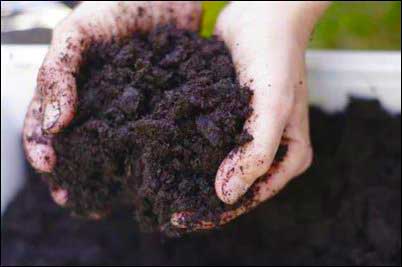
Once you have compost, you have access to the best natural fertilizer in the world. For certain plants that require a feeding every so often, compost tea is your very best bet. To make compost tea fill a 5-gallon bucket 1/3 full of finished compost. Add water to fill the bucket. Stir every day for a week. Strain the liquid through burlap or an old shirt. Put the solid material back in your compost pile and give each plant a drink of compost tea at soil level.
End-of-season chop-and-drop garden clean-up is another way we can implement this permaculture principle. Instead of hauling plant material to the bin, let it rest and rot on the ground. The dead plants will act as a natural mulch, decompose back into the ground, and provide earthworms with food.
Use and Value Renewable Resources and Services.
Taking advantage of natural and renewable resources limits excessive consumption and encourages us to feel a connection with the natural world. We’ve already discussed composting, which is an activity aligned with this principle. Another thing we can do is to use cardboard or newspaper to gently warm the soil and suppress weeds rather than black plastic. Unlike black plastic, the cardboard and newsprint will break down naturally into your garden bed.
We can also allow earthworms to do the deep tilling work in our garden instead of relying on human/mechanical tilling which results in compacted soil. Earthworms aerate the subsoil while fertilizing it with their excrement.
Produce No Waste.
Valuing and making good use of all of the resources available to you so that nothing goes to waste is a common value to every homesteader I know. Of course, reducing the amount of things we buy is the most obvious way to reduce our waste. When it comes to your homestead in general, and your garden soil in particular, the best way to eliminate waste is to create closed loops. An example of a closed loop is when you feed kitchen or garden scraps to your chickens, who then fertilize your garden with their manure, which helps the garden produce more food, leading to more food scraps for the chickens.
We can also be careful about wasting natural resources such as water. When we’re in the rainy season, it is difficult to believe the rain will stop, but we all know it eventually will. By setting up rain barrels, you are refusing to waste natural resources and are preparing yourself for the months when rain is nowhere in sight.
Integrate Rather than Segregate.
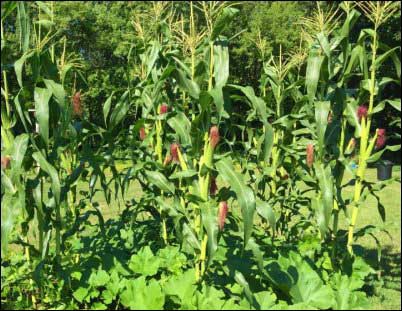
If you put the right things in the right place, relationships will develop between those things and each will work to support the other, lessening your workload and the amount of artificial interventions necessary. Monoculture gardening is an example of how segregating rather than integrating can have devastating effects on the health of your soil. In contrast, companion gardening—placing different plants that work synergistically next to each other—is one example of something you can do to enhance the health of your soil while simultaneously providing your plants with what they need for maximum growth.
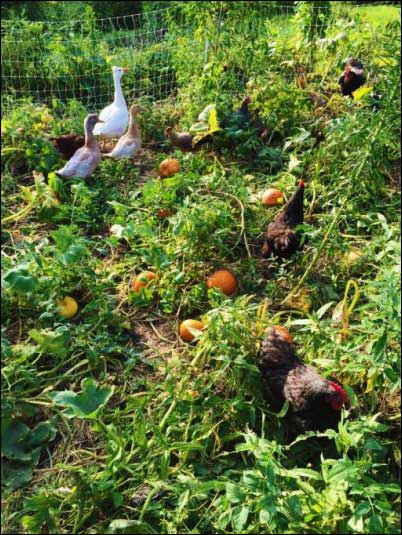
Allowing your chickens to wander through your established garden is another integration technique. Chickens will clean up produce that has fallen to the ground before any disease can be introduced to the soil, as well as eat the insects that would otherwise damage your harvest.
Use and Value Diversity.
Diversification allows you to take advantage of the unique characteristics of your environment and reduces your vulnerability to a variety of threats. Instead of planting rows of a single plant, increase your yield and the health of your soil by interplanting. Interplanting simply means planting a variety of plants together. Leafy greens and root vegetables can be planted between okra plants, for example. The root systems of different plants penetrate to different depths, improving the structure of the soil. Crop rotation does the same thing while also preventing the soil from being depleted of nutrients.
Repairing and improving the soil can seem like a daunting task but it doesn’t need to be. By incorporating a few simple practices, you are taking steps that will improve the soil for the homesteaders who will garden there in generations to come.
