


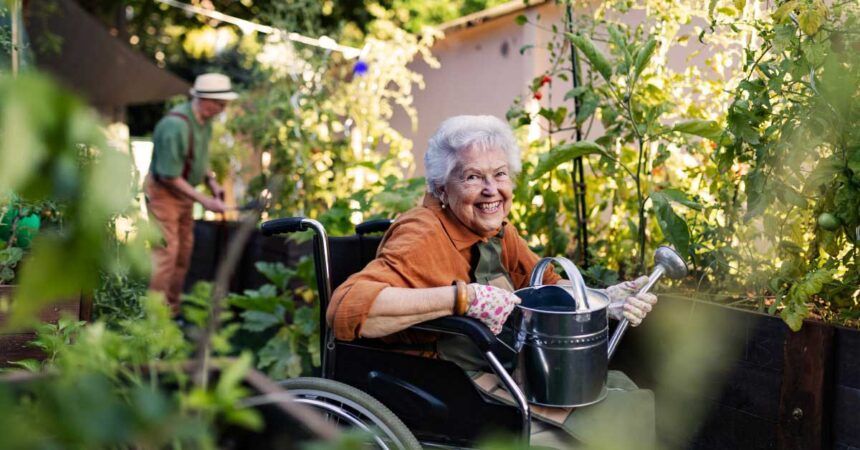
Gardening is an important part of every homesteader’s life. Not only does it provide nutritious food, but it is also a source of joy, education, and physical exercise that everyone needs for a full life. Unfortunately, as we grow older or receive a difficult diagnosis, we may feel that our gardening days are behind us. This does not have to be the case! With some thought, you can create an adaptive garden that ensures gardening is accessible for the differently-abled.
If you think about it, adaptive gardening is something we already do. Our first garden may have been too big to handle, so the following year’s garden was smaller. Over the years we have found ways to make gardening fit our particular needs and abilities. In a nutshell, that’s all that adaptive gardening is.
Before diving into some techniques for particular issues, it’s important to remind ourselves of things everyone, regardless of abilities, should do in the garden. While heat stroke is relatively uncommon, it is quite easy to get heat exhaustion. Wear garden clothes made from breathable material and a wide-brimmed hat. Take drinking water with you and use sunscreen. It’s also a good idea to carry your phone—if you get injured, you certainly don’t want to be sprawled out in the garden until someone happens by.
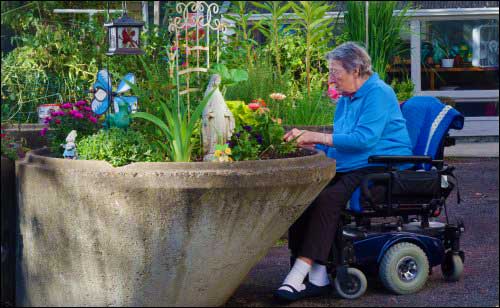
Mobility difficulties are the most common issues and we will all experience changes in mobility as we age. To limit the amount of walking, start by choosing a plot closer to the house. Keep garden tools and containers close to the garden and make sure the garden is near a water source. If that isn’t possible, soaker hoses are an excellent and inexpensive option.
The pathways in and around the garden should be wide enough to accommodate a variety of mobility devices, whether that be a garden scooter, walker, or wheelchair. Pathways made from hard material, such as concrete, are easier to navigate as grass or other soft materials are difficult for wheels to roll on and the feet of walkers and canes can get stuck. Because tripping is very common for people with mobility issues, make sure the pathways are kept free of clutter. You may not need to have handrails through the entire garden, but they are especially helpful in areas where the terrain changes, such as slopes or garden steps. A final word on pathways: adequate lighting is essential. Solar lights lining the path provide a sense of security which encourages time spent in the garden.

Careful consideration about the garden beds will also make mobility issues relatively easy to work around. Raised beds that are no more than three feet wide allow the gardener to reach the center from all sides without having to stoop or strain. This is a game-changer, whether or not mobility is a problem for you! Raised beds also prevent the soil from being compacted, are easier to add compost fertilizer to, and can be quickly covered during inclement weather.
Sensory gardens are another adaptive gardening practice. A sensory garden is simply a garden that has been designed with all the senses in mind. These gardens are lovely for anyone but are particularly helpful to those who are visually impaired, those with autism, and those with trauma issues, such as PTSD. Sensory gardens have also been shown to positively affect persons with dementia.
Choose elements that engage each of our senses to create a sensory garden.
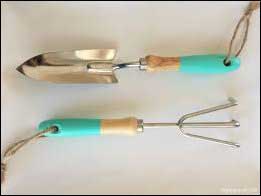
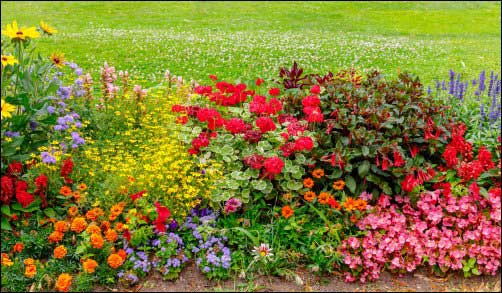
To engage the sense of sight, include high-contrast elements such as brightly colored plants, containers and beds, seating, and/or fences. Gardens specifically catering to people with visual impairment should paint the handles of the gardening tools in a bright color, as well as tie short ropes to the handles of each hand tool. The bright color will make it easier to locate the tool if it is dropped and the short rope makes it easier to retrieve the tool. Incorporate visual cues along the pathway to mark changes in direction. These cues could be large garden sculptures, a garden bench, or a large, potted plant. Color is not the only way to add visual interest. Include plants of varying heights and textures, and plant to encourage butterflies.
Incorporate strong-scented herbs, such as rosemary, lavender, and mint throughout the garden, as well as scented flowers that bloom during different seasons and different times of the day. As you consider the scents to add, be careful that it does not become overwhelming. People with vision issues often have a heightened sense of smell and too much of a good thing can be a problem.
Taste is the easiest sense to provide for in a garden. Containers of fresh herbs can be picked on throughout the season, as can edible flowers. Cherry tomatoes are a good option and you can plant different varieties of strawberries for a staggered crop. Fruit trees can now be found in dwarf varieties, making fresh fruit an option for even the tiniest homestead.
Sound is also a simple element to add to your garden. A healthy garden will naturally buzz and chirp with insects and the music of songbirds. Encourage birds with natural habitats, bird houses, and bird food. Remember – if you start feeding the birds, they come to rely on you. You can add to the music with windchimes and water features.
Touch is arguably our most important sense and the garden can be designed to encourage as much touching as possible. Any décor should be sturdy and glass should be avoided at all costs. Choose plants and materials of different sizes, shapes, and textures. A large boulder could be a fun seat in a large sand area. Garden furniture can be a mixture of wooden, metal, and soft cushions. Soft moss can be planted along the edges of your garden paths.

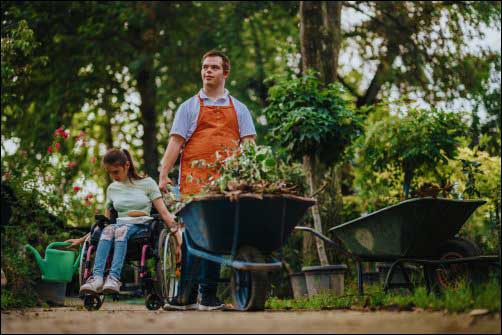
A sense we’re not used to including is called proprioception, which has to do with how your brain understands where your body is in space. People with low proprioception appear uncoordinated and clumsy. Low proprioception often occurs with traumatic brain injuries, strokes, and neurological conditions such as multiple sclerosis, Parkinson’s, Huntington’s, and ALS. Many ordinary gardening activities, such as raking leaves, pushing a wheelbarrow, and moving heavy containers from place to place. If you’re unable to do any of that, no worries – sitting in a porch swing also improves proprioception.