


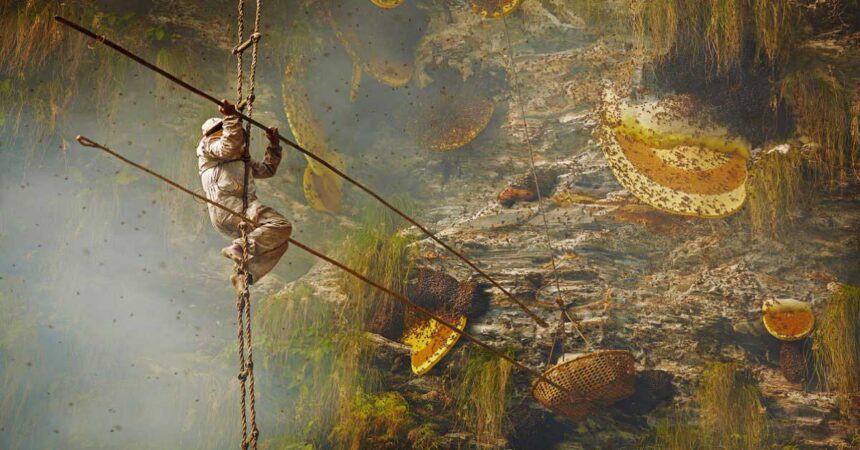
High in the Himalayan cliffs of Nepal, a honey hunter dangles from a handmade ladder, swaying in the cold mist. In one hand, he grips a five-foot pole to dislodge the hives. This is the ancient ritual of mad honey harvesting, practiced by the Gurung people for centuries—dating back to 8,000 BC.
The spring and autumn harvests are sacred. These seasons bring peak bee activity and the most potent honey. The Gurungs see the ritual as a spiritual connection to nature and their ancestors, despite the danger.
Good Vibrations
Inside the hives, bees headbutt each other—a vibrational “stop signal” warning of intruders. They release alarm pheromones and flap their wings rapidly to alert the colony. When they sting, a potent chemical, isopentyl acetate, intensifies their defense.
Still, the hunters climb. Bees swarm, stinging hands and faces, but the men press on. The hives, sometimes holding up to 130 pounds of honey, are fiercely guarded. Yet the hunters manage to secure their prize.
They pray to Rangkemi, god of the bees and revered ancestor, for protection. By middle age, Gurung men perform the task with fearless confidence, proving their courage and commitment to the village. Life in the village is deeply spiritual, guided by elders and rooted in Buddhism and Animism.

Where It Begins
The journey starts with a three-hour trek along rugged trails—paths walked for generations. These trails symbolize the Gurungs’ bond with nature. Once at the cliffs, the hunters build a smoky fire to calm the bees. Though soothed, the bees still prepare to defend their hives.
Job Security
Apis Laboriosa, the Himalayan giant honeybee, is the world’s largest—and most aggressive. The bees form protective curtains around their hives and attack intruders without hesitation. The hunters accept this as part of the job.
After the fire dies down, they construct bamboo ladders and sacrifice a chicken to appease the gods. Then, they scale the cliffs, risking their lives for honey known for its psychoactive effects.
Some Don’t Make It Home
Despite prayers and rituals, some hunters fall. Their names are carved into the cliffs, and Gurung death ceremonies—Pae or Anghum—guide their spirits to the ancestral realm, ensuring lifelong protection for their families.
Mad honey is more than tradition. It’s consumed for health, sold globally, and known for its hallucinogenic and aphrodisiac properties.
The Secret Ingredient
What makes mad honey mad? Rhododendron flowers, which grow wild in the Himalayan mountains, produce a toxic substance called grayanotoxin. Bees drink the nectar and carry it back to the hive, secreting it into the honeycomb cells. This toxin is what gives mad honey its hallucinogenic—and sometimes dangerous—qualities.
Holistic Honey? I Don’t Think So
All it takes is a spoonful to feel the effects—good and bad. Trendy wellness circles tout mad honey as a holistic cure-all. But holistic healing treats the entire body in a positive way, including mood, behavior, and well-being. That’s not the case here.
True believers claim it can erase problems, pain, and even emotional baggage. That’s a tall order with no scientific backing. One spoonful might bring calm—or it might bring nausea, hallucinations, a drop in blood pressure, or worse.
Nepalese villagers have consumed it for generations and may have built up immunity. Westerners? Not so much. The toxin levels vary wildly, making health claims hard to verify. And while it’s legal in many places, sellers may not be upfront about the risks.
So don’t go in blind. “Look before you leap” applies here. Too many chase a psychedelic experience without understanding the cost.
Dosage Facts
Low doses: May create a sense of calm and mild euphoria
Higher doses: May cause nausea, dizziness, unconsciousness
Medicinal Uses
Has been used to treat high blood pressure, diabetes, and pain
Some History
Greek soldiers in 401 BC took in too much of the honey and had bad trips. They had to quit their mission and lie down for days until the vomiting stopped.
Fun Facts
- Mad honey does not taste like regular honey. It has a slightly bitter, earthy taste.
- Mad honey is available on the open market and costs from $6.00 to $50.00 an ounce
- Its effects vary depending on where and how it was harvested
- The honey is legal in the USA, but has been banned in South Korea, Australia, and Brazil.
- Many users say the negative effects outweigh the positive effects, so be sure of your source when purchasing it online.
The Shiver Dance
This is a quick vibration that the bees do with their short wings. It prepares the other bees in a hive to prepare to defend the hive and the queen, or to retreat.
Prepping For The Honey Hunt
Before any hunting begins, the people dance, feast, and make offerings to their gods. This is how they make sure things will go well and the hunters will return safely.
Gurung Witches
In some villages, there are sometimes older women who are thought to be witches. They are respected for their powers but are also shunned to some extent since they are capable of evil. They may be exiled from the village, but not as often these days, because it is now illegal to brand someone as a witch.

Gurung Tourism
The Gurung Tourism Entrepreneurs’ Association promotes tourism that is sustainable and works to preserve the culture of not just the Gurungs, but of all the indigenous peoples of the area. Annual festivals are held, and homestays are growing in popularity.
During a homestay, tourists can enjoy the native foods, experience the rituals performed, and even help with chores.
The people are friendly, and the mountains and scenery are unmatched. This keeps tourists coming back and is a huge boon to the economy.
A Sensory Pilgrimage
Many come just to watch the honey hunters. They are offered a taste of the honey and learn of its history and meaning.
Sacred springs, cliffside shrines, and shamanic rituals are also part of any trip to the Gurung villages. Some say the entire adventure induces a trance-like atmosphere. That’s because life there is a mix of ritual and reality and gives a taste of another way of living so different from that of westerners. It’s the magic of the Himalayans, which are known for their mystical qualities.
There are many reasons to visit Nepal—the majestic mountains, the spiritual culture, and, of course, to see one of the last, great, breathtaking feats of courage and skill of the mad honey hunters.