


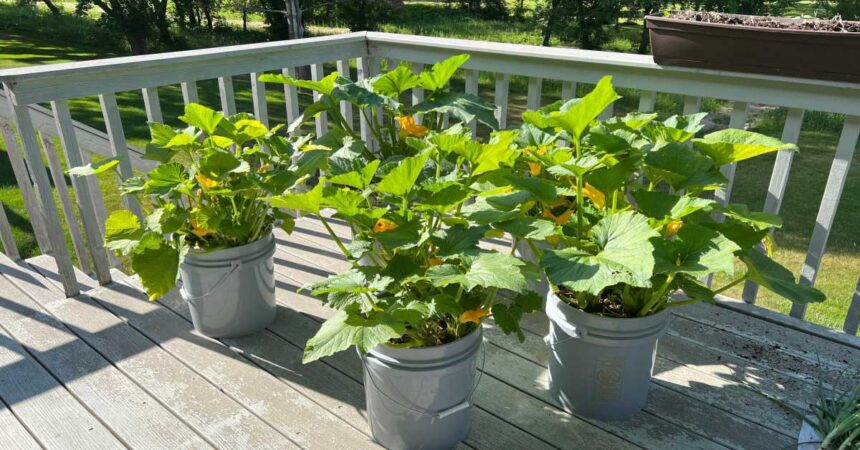
Homesteading is different for everyone but at its core, it is about self-reliance and sustainability. That is why, regardless of the type of homestead, food production always plays an essential role. Don’t be discouraged if you do not have the land to grow a huge garden. Anyone, whether living on hundreds of acres or in a tiny apartment, can grow their own food. Container gardening is something we are all familiar with – if you have grown herbs or flowers in a pot, you are a container gardener. To grow a bucket garden, you simply apply what you already know on a slightly bigger scale. That is how easy it is to grow food in buckets.
Growing food in buckets is not difficult, but it is different than growing food in a traditional garden. Understanding these differences ensures a successful bucket garden. First, you must choose a bucket that is large enough to accommodate the size of your plants. A five-gallon bucket is large enough for most, but not all, plants. If you’re unsure, it’s better to err on the side of too big than too small. A container that is too small for the plant will result in a reduced yield and higher maintenance. Buckets can be found for free. Restaurants often have a surplus of five-gallon containers. Make certain the buckets you get are food-safe and that you sterilize them before planting.

Water is the next consideration. Your buckets will need to have adequate drainage. Drill drainage holes in the bottom and lower portion of each bucket. Plants in containers need to be watered more often than plants in the ground, especially during hot weather. A good soaking once a week will usually do the trick. Check by inserting your index finger into the soil up to the first knuckle. If dry, water it.
The third consideration for your bucket garden is the soil. Because container plants will not be able to gather natural nutrients from the ground, it is important you use high-quality potting soil and amend regularly with compost. A slow-releasing fertilizer is also recommended for container plants. Finally, if you will need to move your plants around for them to receive the appropriate amount of sunlight, consider adding wheels to the bottom of the buckets.
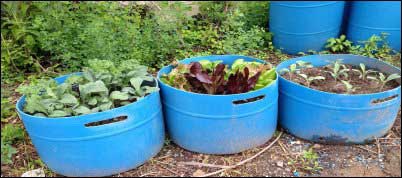
You can plant almost anything in buckets. The following is a list to get you started and it makes use of companion planting so you can get more bang for your buck.
Artichoke & Arugula – Because artichokes are large plants, use a 10-gallon bucket. They need a lot of space, sun, and soil. Artichokes are perennials, meaning you will get produce from this plant year after year. Every three years, repot in fresh soil. Arugula can be planted alongside your artichoke. During the cool months, arugula likes full sun but will need the shade provided by the growing artichoke as the weather warms up. Arugula has a shallow root system which will not interfere with the artichoke. It also attracts hoverflies when it flowers, which eat the aphids that attack artichokes.
Kale & Beets – Plant 10-12 beets and 2 kale plants together in a five-gallon bucket. Kale and beets love the same cool weather and have the same sun and water requirements. Harvest what you need from the kale until the beets are ready to harvest, then use the bucket to plant summer produce.
Tomato or Peppers & Basil – One tomato plant will grow fine in a five-gallon bucket. Planting basil in the same bucket not only improves the flavor of the tomatoes but deters flies and mosquitoes, making this a perfect combination to have on the back porch! Tomatoes and basil both thrive in hot weather and need full sun. Peppers, whether you choose hot peppers or bell peppers, benefit from being planted with basil as well, and they have the same requirements as tomato plants.
Bush Beans & Spinach – Spinach requires full sun during the beginning of the season but will fade out if it doesn’t get shade as it becomes warmer. Planting it with bush beans provides that shade, stretching the length of its growing season a little longer. If you add marigolds to this bucket, you will protect your bush beans from the Mexican bean beetle.
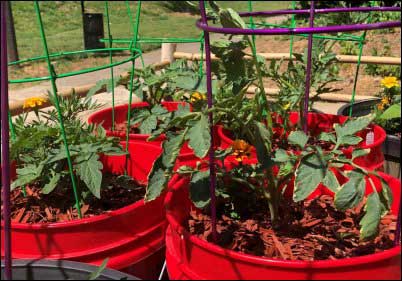
Compact Cucumbers, Lettuce & Nasturtiums – Bush cucumbers will do okay in a five-gallon bucket but will thrive in a 10-gallon bucket. Lettuce will not interfere with the growth of your cucumbers, especially if you plant and cut-and-come-again variety instead of having to harvest heads of lettuce and potentially disturb the root system. Nasturtiums are not only lovely, but edible. They have a slightly spicy flavor and are a great addition to salads. Not only that, they deter aphids and cucumber beetles.
Broccoli, Lettuce & Chives – Plant one broccoli plant per five-gallon bucket since broccoli grows to be rather large. Lettuce enjoys the same season, which makes it a great companion plant. Chives will help deter aphids.
Blueberries, Strawberries & Thyme – Yes, you can grow fruit trees in a bucket. For a dwarf blueberry bush, choose a 25-gallon container. Strawberries around the base of the blueberry bush will keep the soil cool and moist. Thyme attracts beneficial insects. This container can be the focal point of a bucket garden, as blueberry bushes are strikingly beautiful throughout the year.

These are by no means the only veggies you can grow in a five-gallon bucket. Chard, carrots, eggplant, and collards do very well in containers. Smaller containers are great for greens, radishes, and herbs. The important thing to remember is each type of plant will require a certain amount of space to grow successfully. When in doubt, give more room than you think it needs.
Bucket gardening is a simple and relatively inexpensive way to provide nutrient-dense food for your family. It is an easier method of gardening for children, older adults, and those with physical limitations. Bucket gardens are extremely popular at farmers’ markets, especially if you have added wheels to each large container. Source and prepare a few buckets during the cold season and you’ll be able to start your bucket garden early next spring.
