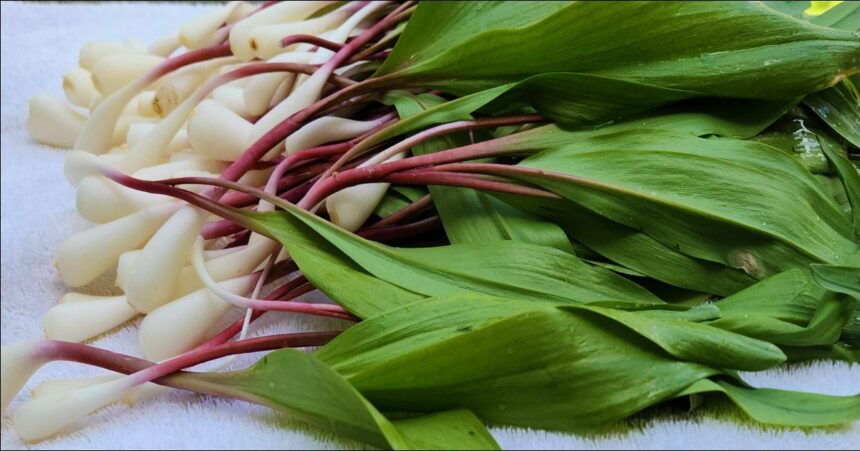
It’s spring, so it’s wild leek season here in Connecticut. Foraging for wild edibles is something we’ve been doing for many years, and springtime brings a seasonal favorite to our table.
We’re fortunate to have 30 acres of woodland right outside the back door. Mushrooms constitute most of our spoils, but when in season, leeks figure prominently in our forays into the “wild.”
Spring Ephemerals
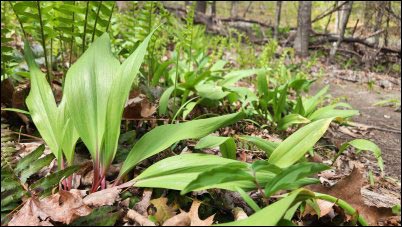
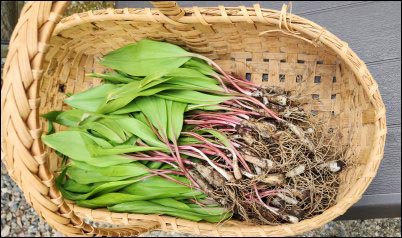
Also called “ramps,” wild leeks, Allium tricoccum, are in a kind of botanical catch-all category termed “spring ephemerals.” In keeping with the word’s meaning, ephemeral plants are, in a way, short-lived. More precisely, they’re perennials and are alive year-round, but they make a relatively brief appearance in the spring and then wither and mostly disappear for the rest of the year. During their window of opportunity, though, they take full advantage of sunlight reaching the forest floor before the overstory fully leafs out and casts its shade.
All parts of the leek plant are edible. We use the leaves in salads and with mixed, cooked vegetables or in soups, omelets, or quiche. The underground bulbs start out slender but grow to more or less grape size by mid-spring. As a close relative of onions, chives, and garlic, leeks have a familial though distinctive flavor. They’re excellent when used in practically any way you’d use their commercially available relatives.
Another spring ephemeral is the red trillium, Trillium erectum. In contrast to leeks, trillium leaves and flowers appear simultaneously. Both plants exploit the same sunny time window, but leek flowers don’t appear until later in summer, after the leaves are long gone. The leek fruits then make a showing in late summer into the fall here in eastern Connecticut.
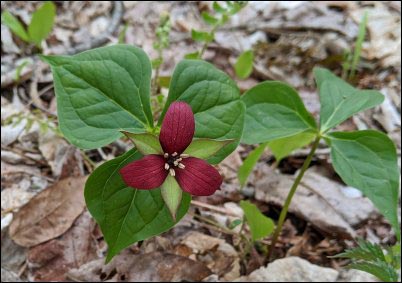
For us, one of the joys of harvesting wild leeks is that the trillium is on display at the same time in the same areas. Although edible, trillium leaf consumption includes some caveats. That, and given that it’s not nearly as abundant as the leeks, with a long life cycle from seed to mature plant, we just enjoy its appearance and leave it to its own.
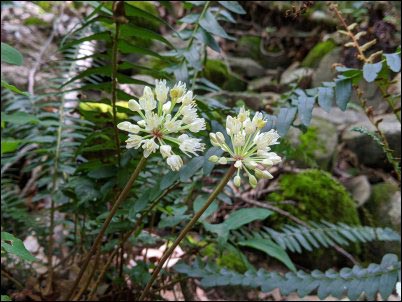
On a mid-summer walk through the woods, when leek-graced soups and salads we enjoyed in spring are but a fond memory, we get a pleasant reminder. With no sign of the leaves anywhere, the leek flowers have their turn. Dense shade is not a deterrent for the flowers since the leaves did the heavy lifting in spring, storing away solar gains from spring to fuel flowering and fruiting for the next cycle.
One rule in the plant kingdom is that flowers lead to fruits, and leeks are no exception. In mid-summer, the flowers remind us of our spring spoils, and in late summer and fall—lest we forget—the leek plant makes one last showing for the year, but this time with its fruits.
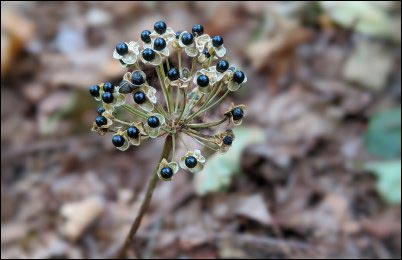
In our parochial way, we think of leek season as those rare days in May when the leaves are lush with chlorophyll, and the bulbs are bursting with flavor. Botanically, though, every season is leek season.
To round out the ephemeral gems we often encounter in spring, edible and inedible, here are two honorable mentions:
Mayapple
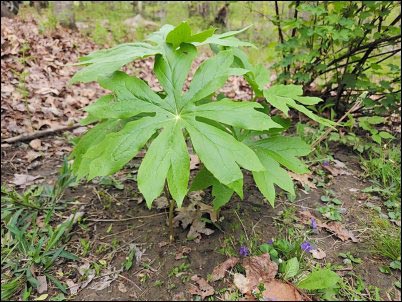
Mayapple, Podophyllum peltatum, is a lovely plant with large, umbrella-like leaves propped upright on a stem that supports one or two leaves. Shoots with only one leaf are plain, while those with two can produce flowers. The blossoms form in axils or joints between the two leaves. The blooms tend to hide under the leaf umbrellas and so can be a bit inconspicuous when viewed from above.
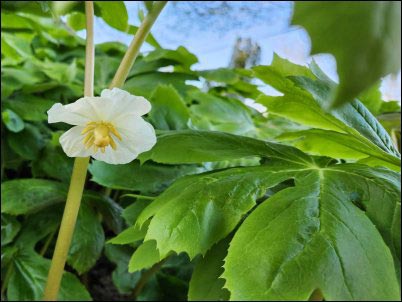
All parts of the mayapple are poisonous to the degree of deadly, with one exception — the fully ripe fruits are edible and reportedly good for jams and the like, but we’ve never tried them. Too risky for my blood.
Bloodroot
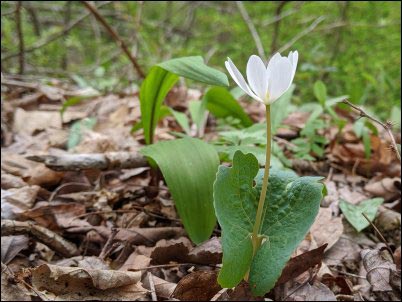
Another iconic (and toxic) spring ephemeral is bloodroot, Sanguinaria canadensis. Its leaf loves its flower so much that it doesn’t seem to want to let go.
To be sure, there are other noteworthy spring ephemerals. One that we often find growing near the bloodroot is trout lily, Erythronium americanum. With its mottled leaves and single drooping yellow flower, it’s as lovely in its own right as any of the others and is a joy to find. Although classified in a different botanical family, trout lilies are similar to mayapples in that plants with a single basal leaf do not flower, only those with two.
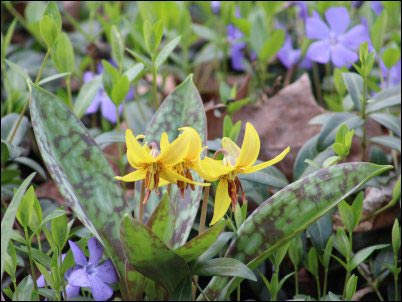
The trout lily is edible, but there are good reasons to leave this one to its own also. One is that, for some people, the leaves can have an emetic effect. Another is that, like trillium, the trout lily is slow to develop, taking several years to complete its life cycle.