


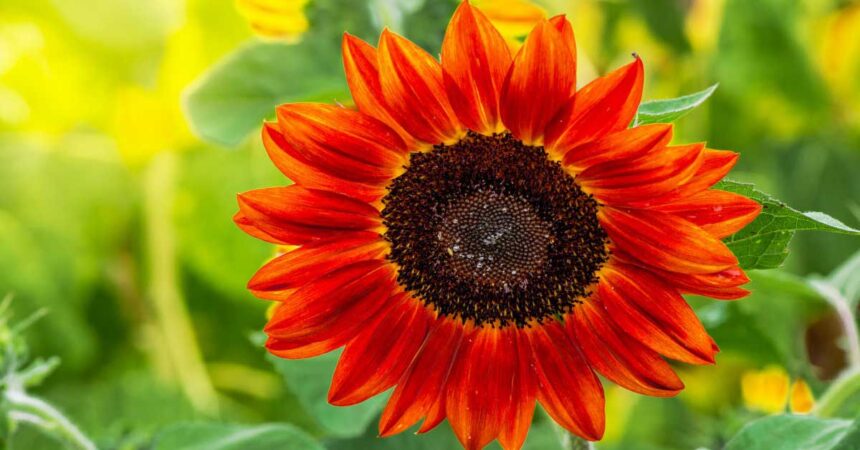
What feels like many months ago, I sat out in the front yard in the rapidly waning December daylight, reveling in the brilliant streaks of red and gold that are typical of our sunsets in late, late autumn. I was contemplating the birdbath perched in the weedy brown mess that had been a happily growing flowerbed a few months ago. That morning the birdbath had been frozen over. A solid undrinkable disk. It might as well have been iron, like its container, for all the good it could do a bird. I remembered how the yard had been full of birds in the spring and summer, basking in the water and hopping among the flowers and cropping the seeds from the large red sunflowers we’d planted for show. In September, I’d dragged down the last of their giant stalks as the bird population started to thin out.
The light was failing fast. I had to admit it. Winter was a-comin’ in.
As I mused about the ice in the birdbath and the ignoble murder of the sunflower stalks, I was aligning my inner clock with the internal timing of our long-ago ancestors. We moderns, who live in civilized places with buildings blocking the heavens and comfy gear to cover our bones when we venture out each day, are less aware than they were of the dying light. For them, the incremental loss of sunshine that begins in the third quarter of the year could herald actual death from cold and deprivation. Snow would begin to blow over the hills as icy fogs and dark portentous rains more and more frequently blocked the sun.
Those who had not done their work earlier, when the high sun blazed overhead, would be doomed. The ailing, crippled, old, the babies, and the women who bore the babies, would be the most vulnerable. Each afternoon, as the darkness gathered, our ancestors would gather. Huddling together for warmth, they would teach their children all the signs, teach them how to survive the time of frosts and the long nights. No streetlights, no planet that glowed day and night no matter what the season. Dark was dark and dark was dangerous.
Fire was both friend and foe. Our ancient forebears used fire to hunt and to destroy, as well as to warm and illuminate their darkened lairs. I have always sensed something defiant about a bonfire, whether lit by high school kids celebrating a football victory, or by shepherds in the Middle Eastern desert. Life is a battle, and fire is a weapon. It wouldn’t have taken a “caveman rocket scientist” to imagine parallels between that big yellow ball in the sky and the red-orange flame on the end of a stick. Both glow bright enough to hurt your eyes and give off a sense of power. Yea, team! Yea, humans hunting, gathering, and surviving the onslaught of darkness! Light, good; darkness, evil.
Another parallel, another weapon in the struggle between light and dark forces, is the strength-giving power of a plant that looks like the sun, surely no accident, and no accident that “sun” is what it has been called since names first came into vogue among our ancestors. Fighting fire with fire, the ancients revered the helianthus (a Greek word for the sun) and used it as a protection against winter’s deprivations.
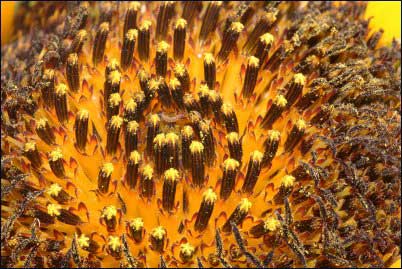
The sunflower is really a sunflowerS. That is, every bloom is actually a head sprouting up to 2,000 separate flowers. The classic sunflower consists of an array of yellow-orange petals on the outside and an inner cluster of florets that will eventually become seeds. These little globules are tipped with pollen in their early stages, and grow in an identifiable spiral pattern; at this point, the sunflower is a bee magnet.
In the early summer, we watched and listened as bees and small wasps hummed greedily around the flower heads, the stalks at that point already taller than either of us. In the final phase of the growing cycle, the inner disc becomes a dense pack of seeds beloved by just about every species of bird. The seed, striped on the outside, carries within it a small greenish-grey kernel that provides nutrition to humans, too, despite its rather paltry size. On the ground around a sunflower plant, there will always be a large telltale scattering of opened seedpods.
The Central American natives recognized the potency of the sunflower thousands of years before the Christian era. It was not only part of their diet; it was intrinsic to their culture. Incans were said to have worshipped the sunflower, and sunflower images have been found in the Andean mountains. Migrating northward, this indigenous American plant spread across the southwest plains. The flower petals were used for dye, and the tough, hairy stalks that I so carelessly dragged away to be consigned to the city landfill would have been excellent fodder if I were keeping any grazing animals.
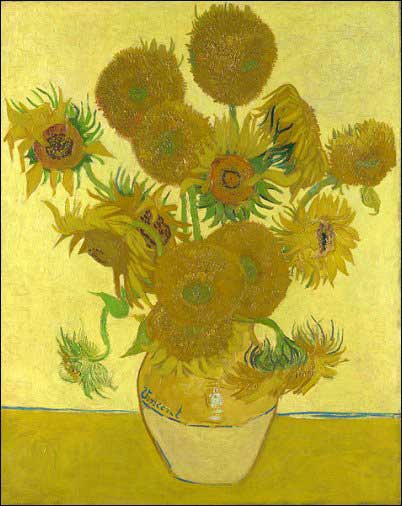
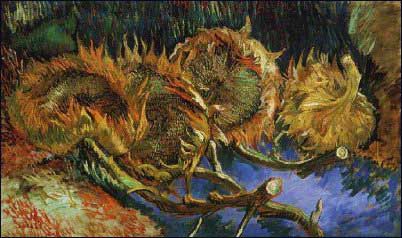
Sunflowers are beloved by artists, having been immortalized in paint by Vincent Van Gogh. In his own way, Van Gogh worshipped the flowers by using them as subjects not once but many times. He was a redheaded man who lived for a time in a yellow house. The sunflowers, painted arranged in vases (from 3 to 15 flowers in various posie poses), were for a time Van Gogh’s obsession. It was a challenge to paint yellow on yellow on yellow, something only a great artist would even bother to grapple with. Van Gogh had another dilemma, finding that the big blooms, once cut and put indoors, wanted to fade fast and die before he could complete their portraits. He also painted a dark series depicting dead sunflowers lying on the ground, pecked out and withered, a state I remember from our garden in late summer when the blooms were still evident but wilted after eager bird beaks had efficiently extracted the seeds.
There is something about sunflowers that makes us smile. The sunflower is the model for talking cartoon flowers. The colors now available range from blood red like the ones we sowed this year, to peppy optimistic yellow verging on white. Heights can go up to nearly 30 feet, making ours at 8’-12’ seem like juniors.
In this very rural part of the world where even the denizens of the downtown area are likely to cultivate veggie gardens in the long warm season, we saw that many people favored sunflowers as a decoration, and often as a living fence around small garden plots. Again there was a sense that sunflowers, with their height and shade and remarkable vigor, offer protection. I would love to be on the Great Plains in the summer when the sunflowers abound more naturally, growing on verges. Kansas adopted them as a state flower. Though it has been denoted as “annuus” (annual), the sunflowers in the west are often perennial. They do as they please and grow as and where they wish. Easy to cultivate (if we can do it, anyone can) sunflowers come with two provisos: if you need shade, be prepared for plenty of it; and don’t plant sunflowers too close to other plants as their survivalist roots will suck nutrients from their neighbors.
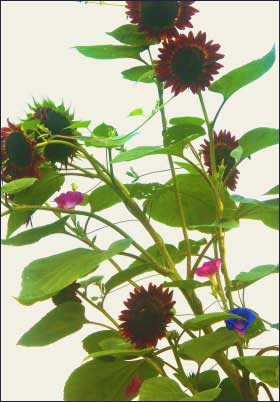 One of the lovely if mildly mythological characteristics of sunflowers is that they are heliotropic, or phototropic. Opinions vary on this point, but most botanists agree that the plant when young (before flowering) follows the sun. That is, it will lean to the east in the morning and to the west by dusk. Later, the plant becomes stationary and faces one way all day. I would guess that once the flowers are in bloom and the disc has begun to set seed, the head is too darn heavy to bob around. Wrestling with full-grown sunflower “trees” is no small task.
The heliotropic talents of the sunflower are celebrated in the names given to it around the world: in Spanish and French it is called girasol and tournesol respectively—both names mean “turn sun.”
My husband says that he raises sunflowers for the birds. He isn’t kidding. He loves birds and refuses to set up feeders for fear of making them dependent and disrupting their natural migratory patterns. Much as I have begged for a birdfeeder to go with the birdbath, he stands his philosophical and ornithological ground. But since he supplies our visitors with a natural crop of their favorite food in overwhelming abundance, I figure that’s his way of providing an informal birdfeeder.
Every flower head that I dragged to the side of the road was empty of seeds. Thousands of pecks, and before that thousands of dots of pollen on tiny bee feet. Oh, we do our part to keep the ecosystem flourishing here in Mayberry.

I have been pondering the “rocket scientist” mentality of people who, six thousand years ago and more, figured out that grinding itty-bitty sunflower seeds would yield both flour and oil. Our ancestors “worshipped” by following function, not form. They adored the sunflower because, in its glory in the fullness of its bloom it reminded them of the source of life; but they didn’t hesitate to tear it apart and use every part for some necessary and life-giving purpose.
Various parts of the sunflower can be utilized in the following ways:
The flowers: a diuretic, fever reducer, lung soother, and expectorant when made into tea; a poultice for snakebite; a dye (it’s purple, not yellow).
The leaves: anti-malarial.
The roots: pain reliever for rheumatism when made into a decoction.
Stalks: fodder for animals, and used in papermaking.
The kernels: food, raw, baked, or ground into meal or paste (as a hypo-allergenic substitute for peanut butter), diuretic, expectorant; low or non-allergenic emollient, skin restorative.
Plant detectives believe that the Spanish soldiers who came not to praise the native peoples but to bury them, brought sunflower seeds back to Europe. They’re easy to carry and would have been a welcome snack on board a galleon loaded down with stolen treasure. I recently learned that compared to the average Europeans of the 1500-1600s, the average Native Americans were godlike in health, strength, and stature. Maybe the puny but well-armed Spaniards wanted to get some of the Incan vigor by eating what the Incas ate—what whole food fans still recommend: sunflower kernels. By one of those flukes that make plant detective work so interesting, sunflowers really took off in Russia once introduced there. Grown agriculturally for oil, the plant also has a current (past few hundred years) destiny as a decoration and is cultivated for that purpose all over the world, including here in Mayberry.
Sunflower “seeds” (actually the kernels) are widely touted as an ingredient in healthy bars and breads. Because they are so small, the kernels are undoubtedly too frustrating for the average person to do anything but eat by the handful. Of course, the Incas and other ancestors were not “average” and grinding the kernels and exuding the oil was done laboriously by hand. These days, machines do the work, and sunflower flour (I just love saying that!) can be mixed with other flours to make bread, much as almond flour is used. It is low in gluten and rich in B vitamins. The oil is mild in flavor and yellow (no surprise) in color, and low in saturated fats.
So instead of mourning the dying light this winter season, instead of getting ratty-minded about these short days and how they’re abridging your freedom to go outside and play, why not enjoy the natural gift that keeps on giving? Eat sunflower seeds, and as you munch, think about the plant’s grand, odorless, inspiring, and warming colors, from buttery ochers to flaming crimson. Meditate about the ancient Peruvians on the sunny side of the mountain grinding away at the tiny kernels to produce thimblefuls of oil keep their faces glowing and their muscles and joints ache-free.
Go get a Van Gogh poster for your study and look at it every time you get gloomy. Make the sunflower a part of your personality—spread it around with a smile and a piece of sunflower seed bread spread with sunflower seed butter!
Try this dense “cake” of sunflower seeds:
- 1 cup whole-wheat flour
- 1 cup white self-rising flour
- 1/4 cup sugar
- 1 teaspoon salt
- 1/4 cup honey
- 1 egg
- 3/4 cup milk or buttermilk
- 2 tablespoons melted butter or margarine
- 1 cup (that’s a lot!) roasted and salted sunflower seeds*
*If you have raw sunflower seeds, bake them for 10 minutes with a coating of olive oil (or sunflower oil if you have it!)
Preheat oven to 350 degrees F.
Mix the dry ingredients together. In a separate bowl, mix the wet ingredients. Add the wet ingredients to the dry ingredients. Fold in the sunflower seeds. Put the batter in an oiled, floured bread pan and sprinkle the top with sunflower seeds. Bake for 35-40 minutes. Because of the heaviness of the seeds, this mixture won’t rise. The loaf will be flat, dense and sweet. And very healthy!
And as you eat the sunflower cake, consider this: one ancient European name for the sunflower was “sol invictus”—the unconquerable sun. Just as the great ball of fire rolls away for a few months, its return is written in the stars. Rejoice!